
River Valleys, Desert Pathways, and the Cultural Networks of Southern Arizona
While the ancient Hohokam, the Tohono O’odham, and the Apache are often the most recognized Indigenous cultures associated with southern Arizona, the Oro Valley region was also shaped by a number of smaller, historically underrepresented Indigenous communities whose histories remain essential to understanding the region’s cultural development. Rivers, springs, upland terraces, and desert migration routes supported generations of Indigenous peoples who adapted to the environment through agriculture, seasonal movement, trade, and ecological stewardship.
These communities contributed to a complex cultural landscape that extended far beyond the boundaries of any single tribe or settlement. Archaeological evidence throughout Oro Valley and the Upper Santa Cruz watershed demonstrates that the region functioned as both a permanent homeland and a cultural crossroads connecting the deserts of southern Arizona to other surrounding Indigenous networks across the greater Southwest.
Among the most significant Indigenous groups associated with the Oro Valley region were the Sobaipuri, a subgroup of the broader O’odham peoples who emerged around the thirteenth century and remained active throughout the Santa Cruz River Valley into the eighteenth century. Their communities occupied fertile riparian corridors (highly vegetated strips of land along bodies of water) stretching through present-day southern Arizona.

Sobaipuri Man
The Sobaipuri practiced a mixed subsistence lifestyle centered on agriculture, hunting, and gathering. Using floodplain irrigation and dryland farming methods adapted to the Sonoran Desert, they cultivated maize, beans, and squash while supplementing their diet with deer, rabbits, small mammals, mesquite beans, agave, and native grasses. Their survival depended on extensive environmental knowledge and careful management of seasonal water systems.
Settlements were generally small and dispersed near rivers, washes, or springs. Villages frequently included semi-subterranean pithouses covered with brush or adobe superstructures designed to regulate desert temperatures. Seasonal movement between upland camps and riverine agricultural settlements allowed communities to adapt to changing environmental conditions while maintaining strong kinship and ceremonial connections across the landscape.
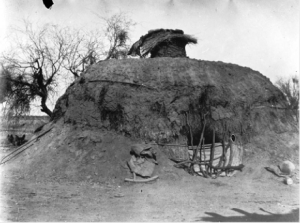
Traditional Sobaipuri O’odham House
Archaeological evidence throughout the Oro Valley area includes irrigation canals, terrace farming systems, pithouse foundations, pottery fragments, and scattered stone tools associated with Sobaipuri occupation. These remains demonstrate the continuation of long-established agricultural traditions that linked later O’odham communities with earlier regional cultures.
Spanish contact during the late seventeenth century brought dramatic change to the Sobaipuri. Jesuit and Franciscan missionaries established mission systems along the Santa Cruz River, introducing disease, colonial labor demands, and social disruption. Some Sobaipuri communities incorporated aspects of mission life while continuing to maintain traditional ceremonies, agricultural practices, and kinship structures. Despite population decline and displacement, cultural ties to the river valleys and surrounding desert landscapes persisted.
The Sobaipuri also served as an important cultural connection between southern Hohokam population centers and Indigenous groups farther north. Trade, migration, and shared agricultural knowledge contributed to a broader network of interaction throughout the Southwest.
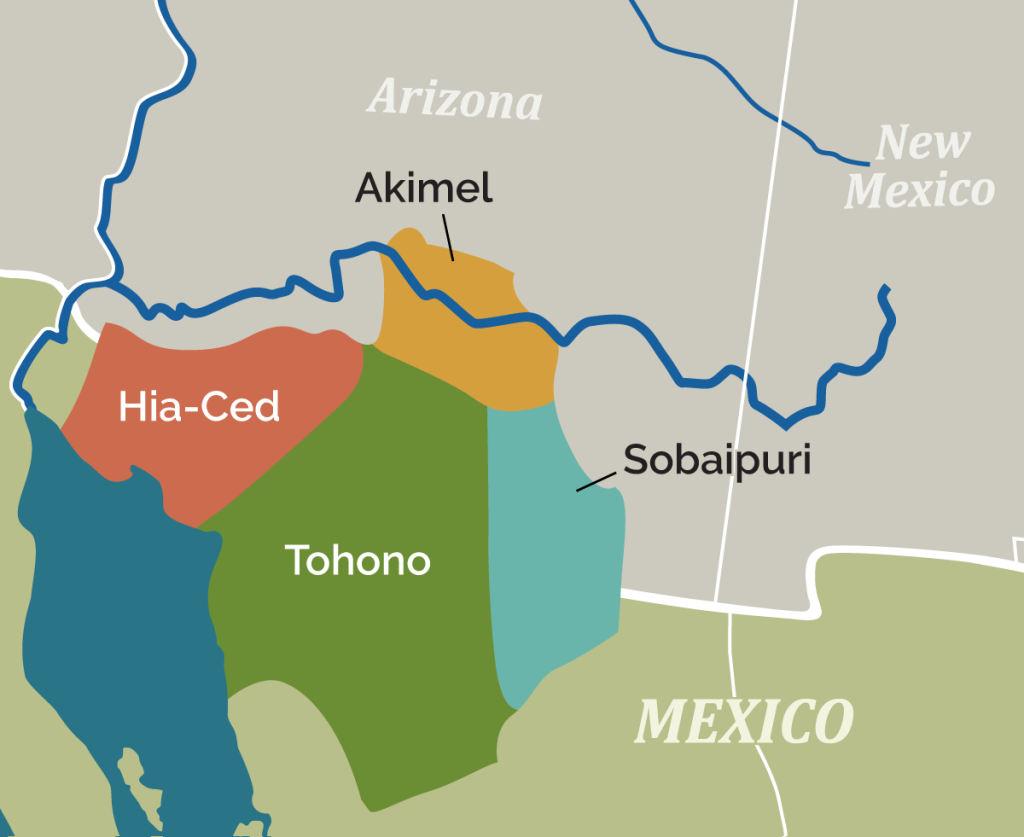
O’Odham Past Territories Map
Another historically underrepresented Indigenous presence in the Oro Valley region is associated with the Hia C-ed O’odham, sometimes referred to as the “River People.” Although often overlooked in colonial and archaeological records, these communities maintained longstanding relationships with the springs, tributaries, wetlands, and river corridors of southern Arizona from pre-contact periods into the present.
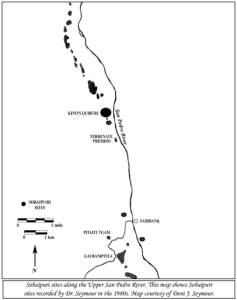
Sabaipuri Sites Along the San Pedro River Map
The Hia C-ed O’odham generally lived in smaller, semi-permanent hamlets situated near dependable water sources. Unlike larger agricultural settlements, these communities emphasized mobility and flexibility, relocating seasonally in response to environmental
conditions and resource availability. Water played both a practical and spiritual role in community life – shaping settlement patterns, agriculture, ceremony, and seasonal
movement.
Fishing, gathering, and small-scale irrigation agriculture formed the foundation of their livelihood strategies. Communities harvested seasonal desert plants while maintaining irrigation systems suited to smaller riparian environments. Ceremonial traditions were closely tied to rainfall, fertility, and the seasonal cycles of the desert ecosystem, reflecting a worldview centered on balance between people and the natural environment.
Archaeological traces connected to these communities are often modest in scale but remain significant. Midden deposits, pottery fragments, irrigation features, basketry remains, and small habitation sites near riverbeds and springs indicate a sustained Indigenous presence throughout the Oro Valley region. These material remains reflect long-term relationships between people and the riparian ecosystems of the Santa Cruz watershed, underscoring the importance of water as the foundation of life in the Sonoran Desert. Often overlooked in colonial records, these communities were at times incorrectly described as “extinct”, a misconception shaped in part by population disruptions in the nineteenth century – including disease outbreaks such as the 1851 Yellow Fever epidemic.
Despite these misunderstandings in the historical record, descendant communities continue to exist today. The Hia C-ed O’odham, in particular, remain actively engaged in efforts toward federal recognition, making them the only surviving Indigenous group in Arizona currently without that designation. Their continued presence emphasizes that these are not lost histories but living cultural traditions and communities whose relationships to land and water continue into the present.
Sabaipuri Sites Along the San Pedro River Map
The Upper Santa Cruz River watershed also supported a broader network of Indigenous communities between approximately 1100 and 1700 CE. Archaeologists frequently describe these populations collectively as part of an Upper Santa Cruz River cultural complex, representing communities that bridged the later Hohokam period and the early colonial era.
These settlements occupied both valley floors and upland terraces throughout the Oro Valley region. Archaeological evidence includes pithouse villages, irrigation canals, burial areas, terrace farming systems, and artifact scatters demonstrating both permanent settlement and seasonal mobility. Water management systems were particularly sophisticated, adapting irrigation techniques to changing river conditions and desert terrain.
These communities also functioned as an important cultural corridor connecting southern Arizona populations with Indigenous groups farther north and east. Trade networks facilitated the movement of pottery styles, agricultural knowledge, ceremonial traditions, and material goods throughout the Southwest.
Mortuary practices discovered throughout the Upper Santa Cruz region suggest complex ceremonial and social traditions that were tied closely to ancestry and landscape. Both communal and individual burials have been identified, reflecting diverse spiritual customs and longstanding relationships with place. Seasonal movement patterns were not signs of instability, but adaptive strategies that balanced permanent settlements with environmental flexibility.
The archaeological record demonstrates that these communities maintained resilient systems of agriculture, trade, and social organization capable of adapting to changing environmental and political conditions across centuries.
In addition to permanent and semi-permanent settlements, the Oro Valley region was also utilized by smaller mobile or desert-adapted Indigenous groups moving through upland and arid areas surrounding the Santa Cruz watershed. These populations may have included Mogollon-influenced hunter-gatherers from the northeast, Western Pueblo migrants traveling southward, and smaller nomadic bands following seasonal resources across the desert.
These less-documented Indigenous groups generally left lighter archaeological signatures than large agricultural settlements. Temporary campsites, lithic scatters, projectile points, grinding stones, and rock shelters provide evidence of seasonal movement through the region. Their mobility reflected extensive ecological knowledge that allowed communities to track rainfall, game migration, edible plants, and temporary water sources throughout the difficult desert terrain.
Toolkits emphasized portability and versatility – hunting implements, cutting tools, woven containers, and grinding equipment supported highly mobile lifestyles adapted to seasonal environmental changes. Interaction with larger settlements likely occurred through trade, ceremonial gatherings, and regional exchange networks.
These overlooked Indigenous communities played an important role in connecting distant populations across the Southwest. Through migration and exchange, they contributed to the spread of technology, ecological knowledge, and ceremonial traditions between riverine agricultural communities and more distant Indigenous cultures.
The Oro Valley region was shaped by a diverse network of Indigenous peoples whose histories extend across rivers, deserts, uplands, and seasonal migration routes –and their descendant communities continue to live in and maintain relationships with these landscapes today. The Sobaipuri, the Hia C-ed O’odham, Upper Santa Cruz River communities (and other historically underrepresented Indigenous groups), each contributed to the development of complex systems of agriculture, trade, ceremony, and environmental guardianship that shaped southern Arizona and continue to do so today.
Rather than representing a closed chapter, these communities are part of an ongoing Indigenous presence in the region. Their relationships to land and water reflect long-standing systems of stewardship that persist in contemporary cultural practices, knowledge transmission, and community identity. Oro Valley and the surrounding Santa Cruz watershed are therefore better understood, not as landscapes of past occupation, but as living cultural homelands shaped by continuous Indigenous care, adaptation, and survival.
Recognizing these Indigenous nations helps broaden our understanding of Arizona’s past, while also affirming the enduring and active role of Native peoples within the region.

Brittnie Smith