Step into the Legend of Earl Linwood Francis

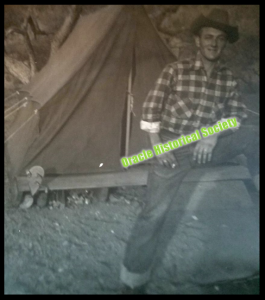
Earl Linwood Francis by Tent - watermarked

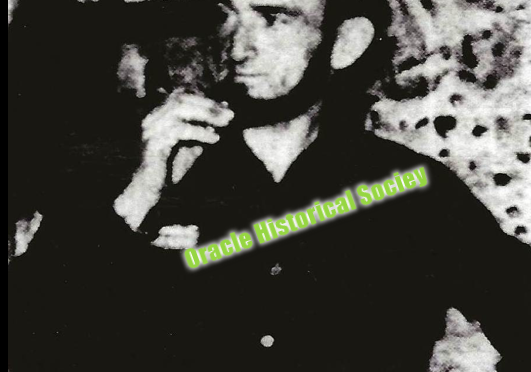
Earl Linwood Francis, (without beard), posed in front of his wooden platform with his tent; likely at his mining claim near Oracle, AZ (Courtesy of Traci Lemaster)

On February 27, 2026, Oracle Historical Society Historian Royal John Medley presented the rich and colorful life of Earl Linwood Francis (1931–1966)—a prospector, adventurer, and unapologetic individualist whose legacy remains woven into the landscape of Oracle. AZ.

Who was Earl? A bold character who chased fortune, defied convention, and left behind a trail of larger-than-life tales. From mining escapades to boundary-pushing dreams, his short but extraordinary life became woven into the very fabric of Oracle’s history.

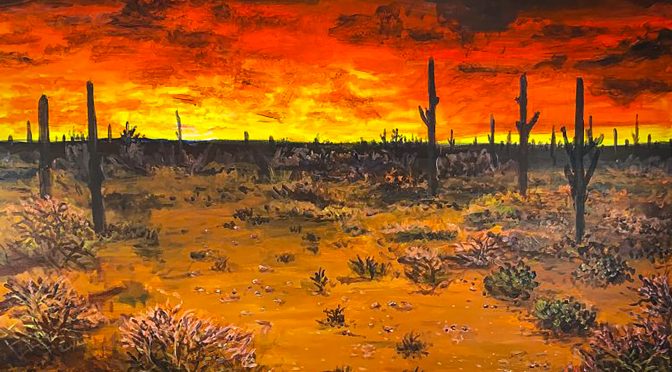
Floral still life by Earl Francis attached to door of cabinet he constructed from wood salvaged from wooden fruit crates. As currently displayed at Acadia Ranch Museum (Courtesy of Traci Lemaster) - watermarked

Floral still life by Earl Francis attached to door of cabinet he constructed from wood salvaged from wooden fruit crates. As currently displayed at Acadia Ranch Museum (Courtesy of Traci Lemaster)

Click here to view the presentation in which all contents and intellectual property are protected by Copyright 2025 by Royal John Medley.

Oracle Historical Society – visit the museums and explore the town.

Other content provided by Oracle Historical Society Historian, Royal John Medley:

Art, Adoption, and Appropriation – Hopi Imagery and the Arizona Citrus Industry – Circa 1920’s -1950’s

Citrus & Saguaros – An Illustrated History of Citrus in Arizona 1888-1960 – scroll down the Heritage Garden page to find this article.

Lettuce and Landscapes – An Illustrated History of Commercial Row Crops in Arizona (Circa 1920’s-1960’s) – scroll down the Heritage Garden page to find this article.

Watch Labeled as Art on the AZPM YouTube Channel – John Royal Medley Jr. has collected more than 280 citrus crate labels that create a unique lens through which to view over a century of Arizona’s history. Themes include Victorian, tourism and cowboy and there is a surprising story involving a Sun Devil.

Visit the Acadia Ranch Museum operated by the Oracle Historical Society on Saturdays, 11am – 3pm.


OVHS Celebrating 20 Years – Ribbon Cutting Ceremony 2025

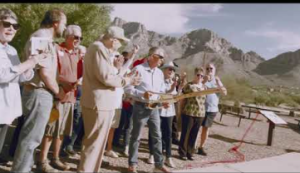
On October 18, 2025, OVHS marked its 20th anniversary as a champion of Greater Oro Valley history. Enjoy this short video featuring OVHS founding members, longtime supporters, and Town Council representatives. The celebration concluded with a ribbon‑cutting led by Mayor Joe Winfield. Filmed by Mark Headley, Producer, Production Manager, Director on October 18, 2025.

Watch this short video:

OVHS 20th Anniversary Ribbon Cutting, October 2025 with Mayor Joe Winfield

OVHS 20th Anniversary Ribbon Cutting, October 2025 with Mayor Joe Winfield

A Day Trip to St. Anthony’s Greek Orthodox Monastery and more!


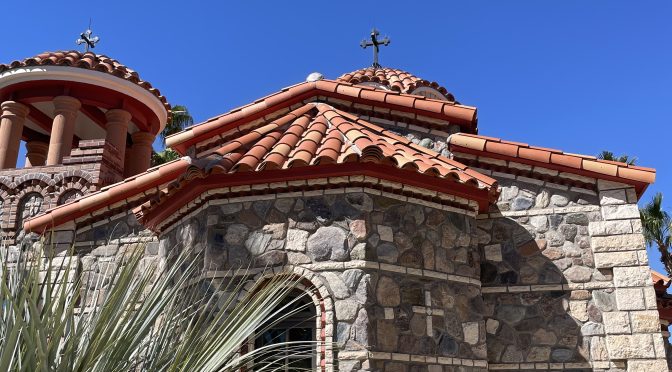
St. Anthony's Greek Orthodox Monastery Cross, Florence, AZ, March 2025

St. Anthony’s Greek Orthodox Monastery Cross, Florence, AZ

St. Anthony's Greek Orthodox Monastery Interior of a Building with arched wooden beams, March 2025, Florence, AZ.

St. Anthony’s Greek Orthodox Monastery.

Did you know that tucked away in Florence, Arizona, there’s a stunning Greek Orthodox monastery waiting to be discovered? Hidden just off Paisano Drive, the moment you pass through the gates you’re met with breathtaking architecture—each chapel and building uniquely designed, yet all sharing the same serene, peaceful atmosphere. It feels less like a stop on a drive and more like a brief retreat for the soul.  Discover more about this gem in the desert:  St. Anthony’s Greek Orthodox Monastery and planning your trip.


Once you’ve soaked in the tranquility, continue the Greek-inspired experience in Florence at the Mount Athos Restaurant & Cafe. Treat yourself to authentic hummus, savory gyros, and—if you’re feeling adventurous—some flaming Saganaki.

Drawing of Four Greeks Eating


Just a short drive from the restaurant—on the same side of State Highway 70 near North Pinal Parkway (State Highway 79), about 0.1 miles south of East Hunt Highway—you’ll find two historic markers conveniently located right along the roadside. You can pull your car right up beside them for an easy stop.

John Button Salmon Bear Down Historic Marker, Florence, AZ, January 2026

John “Button” Salmon Bear Down Historic Marker, Florence, AZ

Charles Debrille Poston Historic Marker, Florence, AZ, January 2026

Charles Debrille Poston Historic Marker on Arizona Route 79 Florence, AZ


These markers share the stories of Charles Debrille Poston, namesake of Poston Butte, and the origin of the University of Arizona Wildcats’ iconic “Bear Down” motto, left as a lasting legacy by John “Button” Salmon.


Ready to burn off some of that delicious lunch? Take a stroll on our Walking Tour: Discover Florence’s Hidden History. Head into Downtown Florence and wander among the town’s historic homes and buildings, each marked with bright blue signs that share their unique stories.

Historic Downtown Florence Arizona Red Metal Sign

Set your own easygoing pace—this walk is meant to be enjoyed, not rushed. And when you’re ready for a drink or a little pick‑me‑up, Main Street offers plenty of inviting spots to refuel….and don’t forget to visit the McFarland Historic State Park and Pima County Historical Museum located at 715 N. Main Street—an amazing spot only three minutes from Downtown Florence!

Tom Mix Historical Stone Monument Marker on North Pinal Parkway (State Highway 79)

Tom Mix Historical Marker on North Pinal Parkway (State Highway 79)


If your travels take you south toward Oracle or Tucson, make a quick stop at the roadside rest area to learn about the site of the tragic 1940 accident that claimed the life of western film star Tom Mix.

A historic marker shares the story and preserves the memory of one of Hollywood’s early legends.

Find more things to do in Explore More section of the OVHS website and other historic towns, landmarks, and museums within an easy car drive!

Discover the Hohokam – Three Sites You Shouldn’t Miss

Visiting the Past with Respect Today

While many Hohokam sites are protected and not open to the public, there are meaningful ways to engage with this history respectfully.

School Field Trip with Paul Canez and Kids in Pit House_October 2025

School Field Trip with Paul Canez and Kids in Pit House, October 2025

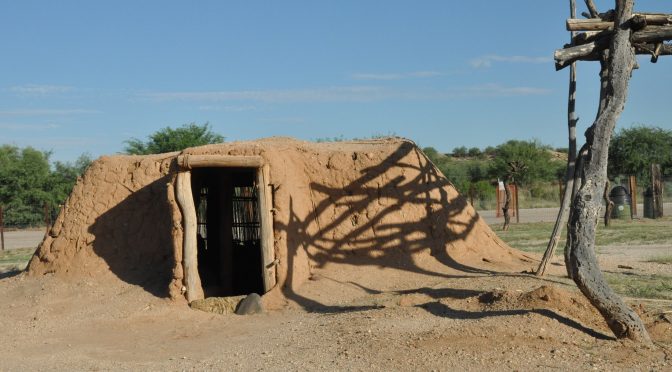
Pit House Replica at Steam Pump Ranch in the Heritage Garden.

Pit House Replica at Steam Pump Ranch in the Heritage Garden.

In Oro Valley, the Pusch House Museum at Steam Pump Ranch offers an accessible entry point. Though the historic buildings date to the late nineteenth century, the site itself sits within a landscape long inhabited by Indigenous communities. Interpretive materials and programs help visitors understand the deeper history beneath the ranch era. Enjoy a visit to their Heritage Garden, where they grow traditional crops and have a replica of a classic Hohokam pit house. Watch this video to see how the Hohokam constructed their homes.


Nearby, Casa Grande Ruins National Monument preserves one of the most impressive Hohokam structures, offering context for the regional networks that once connected Oro Valley to the Salt and Gila River valleys. Museums such as the Arizona State Museum in Tucson further expand this story, often incorporating Indigenous voices and perspectives.
When visiting, it is important to remember that these are not abandoned places. They are ancestral homelands. They are deserving of care, respect, and thoughtful engagement.

This above is an excerpt from The Hohokam and Huhugam: An Enduring Presence in Oro Valley and the Greater Tucson Basin by Brittnie Smith, January 2026.

Hohokam: Honoring the First People of Oro Valley, by Devon Sloan, November 2023

Find more things to do in Explore More section of the OVHS website and other historic towns, landmarks, and museums within an easy car drive!

other Resources:

Use these helpful tips to find the Honey Bee Canyon Petroglyphs and Discover the Hohokam – Three Sites You Shouldn’t Miss

Learn more about pit houses, native crops, the Honey Bee Village excavation and more at the Heritage Garden at Steam Pump Ranch, operated by the Oro Valley Historical Society.

Watch videos on the OVHS YouTube Channel:

OVHS Video Series: Introduction to the Hohokam and Their Craft Traditions with Mary Jo McMullen

The Hohokam and Huhugam

When you stand along the Santa Cruz River or follow the curve of the Cañada del Oro Wash as it moves quietly through Oro Valley, you are standing on a landscape shaped by human hands for thousands of years. Long before Arizona was a territory or a state, generations before Spanish place names reshaped the map, and well before American borders defined the region, Indigenous communities engineered waterways, built villages, and cultivated deep relationships with the desert. Archaeologists refer to these ancestral people as the Hohokam, while their descendants – the Tohono O’odham and Akimel O’odham – know them as the Huhugam, “those who came before.” Both terms matter, and together they tell a more complete story of continuity, adaptation, and belonging.
This story is especially close to home in Oro Valley and the greater Tucson Basin, where some of the most important evidence of Hohokam life has been uncovered and carefully preserved.

A Landscape Made for Life

The Hohokam cultural tradition flourished across central and southern Arizona from roughly 300 CE to 1450 CE, concentrated along the Salt, Gila, and Santa Cruz Rivers. These waterways were not obstacles to overcome, but partners in survival. Seasonal flooding renewed soils and shallow water tables made irrigation possible in an otherwise arid land.
Oro Valley occupies a particularly important place within this geography. Located in the northern part of the Santa Cruz Valley (near the meeting point of the Santa Cruz River and the Cañada del Oro Wash) the area houses dense Hohokam archaeological sites. It was both a gateway and a connector, linking the Tucson Basin to communities farther north near present-day Marana and, eventually, to major regional centers such as Casa Grande (about fifty miles away).
Cities near Oro Valley today – like Tucson and Marana – all sit atop or beside ancient village sites. Modern roads often follow the same routes as prehistoric trails and washes still trace paths first managed by indigenous peoples who lived centuries ago.

Deep Roots: Before the Name “Hohokam”

Long before archaeologists identified a distinct Hohokam cultural pattern, people were already farming and shaping the land here. Near Marana, the Las Capas site has revealed irrigation canals dating as early as 1200 BCE, among the oldest known in North America. These early canals demonstrate a sophisticated understanding of water flow, soil, and seasonal change.
For communities descended from this civilization, this period is not a prelude or “beginning,” but part of a long continuum. The Huhugam did not suddenly appear nor disappear; rather, what archaeologists label the Hohokam archaeological tradition, actually reflects generations of accumulated knowledge, practice, and enduring relationships with the land.

Early Agricultural Flourishing (c. 300–750 CE)

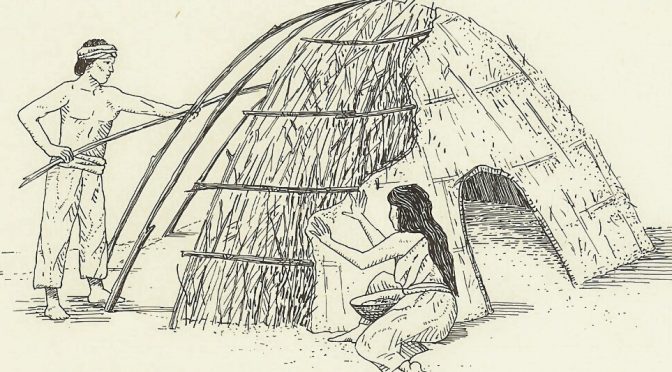
Circa 300 CE, communities along the Santa Cruz River and its tributaries began establishing more permanent villages. Homes were typically pithouses, built partially below ground to moderate desert temperatures. Families cultivated maize, beans, and squash, supported by expanding canal systems that carried river water to fields.

Hohokam Making Pit House Sketch

Sketch of Hohokam Making Pit House

Pottery from this period, like early red-on-buff ceramics, shows both practical skill and an emerging regional identity. These vessels were used for storage, cooking, and daily life – but they also reflect shared aesthetic traditions that linked communities across the region.
In the Oro Valley area, small settlements likely clustered near reliable water sources, connected to neighboring villages through shared irrigation and seasonal gatherings. This was not “settling” empty land but deepening a relationship with places already known and valued.


Expanding Communities and Shared Ceremony (c. 750–950 CE)

Hohokam Ballcourt Overgrown

Hohokam Ballcourt Overgrown

Between 750 and 950 CE, Hohokam communities grew in both size and complexity. Villages multiplied along major waterways, and long-distance trade intensified. One of the most distinctive features of this era is the appearance of ballcourts – large, oval earthen structures used for community gatherings. These are extremely similar to ballcourts found further south in Latin America, which may allude to a deeper, shared cultural tradition.

Hohokam Ballcourt Rendition

Hohokam Ballcourt Rendition

Ballcourts were more than athletic spaces. They functioned as places of ceremony, exchange, and social connection – often drawing people from surrounding villages. Goods (such as marine shells from the Gulf of California, obsidian, and copper bells) moved along these networks, carrying not just materials but ideas and relationships.
In Oro Valley, Honey Bee Village began to emerge as an important community during this time. Archaeological evidence suggests it served as a gathering place within the northern Santa Cruz Basin and was closely tied to larger population centers to the south.


Community Consolidation and Cultural Expression (c. 950–1150 CE)

This period marks the height of population and cultural expression in the region. Villages expanded into towns with central plazas, cemeteries, and multiple ballcourts. Irrigation systems became more extensive, supporting hundreds of acres of farmland.

Hohokam Irrigation

Hohokam Irrigation

Craft traditions flourished. Shell jewelry carefully worked stone tools, and finely painted ceramics speak to both artistic refinement and spiritual meaning. These objects were not isolated works of art, but part of everyday and ceremonial life.
At its peak, Honey Bee Village was one of the largest Hohokam settlements in southern Arizona. Located within modern Oro Valley, the site included residential areas, public spaces, and burial grounds. Its size and organization suggest long-term planning and strong community ties. Important archaeological and cultural evidence of a place where people lived, worked, and gathered for generations.

In this video, Henry Wallace, Senior Research Archaeologist with Desert Archaeology, Inc., provides information about the Hohokam people and their life at Honey Bee Canyon, and the excavation of their village.

Transformation and Regional Integration (c. 1150–1350 CE)

Marana Platform Mound

Marana Platform Mound

After 1150 CE, communities across the Hohokam world began to change how they organized spaces and leadership. Many villages transitioned from pithouses to above-ground adobe compounds, and platform mounds appeared as new ceremonial and administrative centers.
Rather than signaling some sort of decline, these changes point to an overall transformation. Social and spiritual life was being reorganized – possibly in response to environmental pressures, population shifts, or evolving belief systems.
In nearby Marana, the Platform Mound Complex illustrates this transition clearly. These mounds likely served as focal points for ceremony and governance, linking surrounding villages into broader regional networks.

Adaptation, Movement, and Continuity (c. 1350–1450 CE)

The final centuries of the Hohokam archaeological sequence were marked by increasing environmental stress. Extended droughts, flooding, and the difficulty of maintaining large canal systems contributed to population movement.
Many settlements were depopulated because of this; however, it was not an abrupt disappearance. Descendant communities emphasize that people moved, reorganized, and adapted – carrying important knowledge, stories, and traditions with them.
The Tohono O’odham and Akimel O’odham maintain oral histories that describe the Hohokam civilization (or the Huhugam) as ancestors whose experiences continue to shape the present. Canals, pottery designs, and place names remain embedded in the landscape – reminders of lives lived in balance with desert and water.

Visiting the Past with Respect Today

While many Hohokam sites are protected and not open to the public, there are meaningful ways to engage with this history respectfully.

Pit House Replica at Steam Pump Ranch in the Heritage Garden.

Pit House Replica at Steam Pump Ranch in the Heritage Garden.

In Oro Valley, the Pusch House Museum at Steam Pump Ranch offers an accessible entry point. Though the historic buildings date to the late nineteenth century, the site itself sits within a landscape long inhabited by Indigenous communities. Interpretive materials and programs help visitors understand the deeper history beneath the ranch era. Enjoy a visit to their Heritage Garden, where they grow traditional crops and have a replica of a classic Hohokam pit house. Watch this video to see how the Hohokam constructed their homes.

Nearby, Casa Grande Ruins National Monument preserves one of the most impressive Hohokam structures, offering context for the regional networks that once connected Oro Valley to the Salt and Gila River valleys. Museums such as the Arizona State Museum in Tucson further expand this story, often incorporating Indigenous voices and perspectives.
When visiting, it is important to remember that these are not abandoned places. They are ancestral homelands. They are deserving of care, respect, and thoughtful engagement.


A Living Story

The story of the Hohokam – of the Huhugam – is not confined to the past. It lives on in the O’odham Nations, in the courses of desert rivers, and in the communities of southern Arizona today. In Oro Valley and the greater Tucson area, this history is quite literally underfoot, woven into the land itself.
By learning to see these places not as ruins but as chapters in a continuing human story, we come closer to understanding the deep roots of this region. And our responsibility to honor them.

Authored By: Brittnie Smith, January 2026

Brittnie Smith Volunteer

Brittnie Smith, OVHS Volunteer

Brittnie Smith is a stay-at-home mom and historian with a BA in Public and Oral History. She has worked in a variety of roles within the historical community, including editing for an award-winning history journal, volunteering as a museum docent, and tutoring both adult learners and high school students. Her interests focus on public history, community storytelling, and helping make history feel accessible and relevant. She is currently a volunteer researcher with the Oro Valley Historical Society, where she assists with research, documentation, and digitization related to local history.


Bibliography & Sources

Barnes, Will C., and Leslie S. Pendleton. Prehistoric Indians of the Southwest. Tucson: Southwest Parks and Monuments Association, 1989.

Ciolek-Torrello, Richard, and Mark T. Swanson, eds. Pit House, Presidio, and Privy: 1,400 Years of Archaeology and History on Block 180, Tucson, Arizona. Tucson: Statistical Research, Inc., 2000.

Cordell, Linda S., and George J. Gumerman, eds. Dynamics of Southwest Prehistory. Tuscaloosa: University of Alabama Press, 2006.

Doyel, David E. The Hohokam: Ancient People of the Desert. Tucson: Southwest Parks and Monuments Association, 2004.

Fish, Suzanne K., Paul R. Fish, and John H. Madsen. The Marana Community in the Hohokam World. Tucson: University of Arizona Press, 2013.

Haury, Emil W. The Hohokam: Desert Farmers and Craftsmen. Tucson: University of Arizona Press, 1976.

Marana Platform Mound sourced from Marana Mound Hohokam Community Flyer
Both Hohokam Ballcourt images sourced from Archaeology Southwest, The Hohokam Ballcourt World
Hohokam Irrigation sourced from Archaeology Southwest, Ancient Cultures – Hohokam

Ready to discover more?

Use these helpful tips to find the Honey Bee Canyon Petroglyphs.and Discover the Hohokam – Three Sites You Shouldn’t Miss

Hohokam: Honoring the First People of Oro Valley, by Devon Sloan, November 2023

Watch videos on the OVHS YouTube Channel:

OVHS Video Series: Introduction to the Hohokam and Their Craft Traditions with Mary Jo McMullen

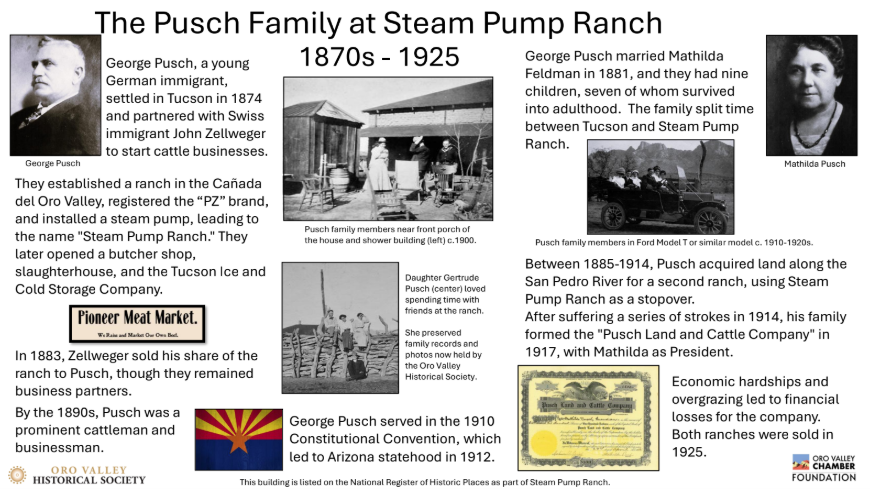
The Pusch’s: From Immigrants to Innovators

The Pusch family legacy lives on at Steam Pump Ranch, now a National Register site!

Pusch Family Sign at Steam Pump Ranch

Pusch Family Sign at Steam Pump Ranch – located outside of museum


Visit the Pusch House Museum at Steam Pump Ranch to view this sign and twelve others that tell the story of the area that became Oro Valley, Arizona.

Check out our Walking Tour page to learn more about this self-guided tour at Steam Pump Ranch and also discover the public art located throughout the property.  You’ll find other walking tours and more things to do in the Oro Valley area!

To find upcoming guided nature walks and their next scheduled dates, go to our Calendar of Events.

Tully & Ochoa Wagon Attack – 1869

This is a reproduction of an oil painting by Edward Zinns, a Colorado miner and artist who was traveling with the wagon train for protection and witnessed the attack firsthand allowing for a rare, accurate depiction.

Tully & Ochoa was a Tucson-based freighting and mercantile company. On May 11, 1869, wagon master Santa Cruz Castaneda led 14 men, nine wagons, and 80 mules from Tucson to Camp Grant. Near Cañada del Oro (by today’s Biosphere 2), about eighty Apache warriors confronted the train. Despite a warning to abandon it, Castaneda refused and revealed a hidden “surprise” cannon (visible in the painting).

Colorful reproduction of the Tully and Ochoa Wagon Attack, May 1869. Apache and settlers in a battle.

Tully and Ochoa Wagon Attack, May 1869

The battle lasted from morning until sundown. Three teamsters were killed and many wounded; Apache fighters also sustained injuries. Soldiers from Camp Grant joined the fight, but when ammunition ran out, Castaneda surrendered the wagons and escaped with military help. The Apache took the freight and mules and burned the wagons.

The original painting, likely commissioned by Tully or Ochoa, passed through several prominent Tucson owners: Sam Katzenstein, owner of the Cosmopolitan Hotel, and then to Sam Hughes founding member of the Arizona Pioneers’ Historical Society.  It is now part of the Arizona Historical Society’s collection.

Smoke Signal Publication, Fall 1973, No. 28. Tucson Corral of the Westerners. Wagon Freighting in Arizona. Painting on cover of magazine depicts Apache attack on Tully and Ochoa wagons.

Attack on Tully and Ochoa May 1869 Smoke Signal Publication


Other resources & ARTICLES:

Hohokam: Honoring the First People of Oro Valley

The Legacy of the Hohokam and Tohono O’odham

Written by Devon Sloan, November 2023

In 1990, President H.W. Bush dedicated November as “National American Indian Heritage Month.” Continuing each year under subsequent presidents, President Barack Obama in 2009, changed the title to “National Native American Heritage Month”.

Hohokam Making Pit House Sketch

The nearest Indian nation to Oro Valley, covering 2.8 million acres with 28,000 members, is the Tohono O’odham which descended from the prehistoric Hohokam, and shared linguistic and cultural roots with the Pima Indian community of Northern Arizona.

The English translation for the Pima word Hohokam is “those who vanished” as it is uncertain what happened to the Hohokam people. Changes in the environment, introduction of newcomers’ diseases, and internal political changes may be reasons for the disappearance. Up until 1986, the Tohono O’odham were called the Papago, a Spanish translation for the Pima word that meant “tepary bean eaters.” Tohono O’odham means “People of the Desert.”

Their existence in Oro Valley became evident with discoveries from around 450 A.D. of communities which included ceremonial mounds, ball courts, cremations, petroglyphs, figurines, decorated pottery, and jewelry of stone, shell and clay. Honey Bee Village, Romero Ruin, and  Hohokam Petroglyph from a newspaperSleeping Snake Village were sites where many of these artifacts were discovered.

The Hohokam were farmers, making the desert work for them, by creating sophisticated canal systems, using ditch irrigation, dry farming, and storm water runoff to irrigate their crops of cotton, tobacco, corn, beans, melon, sugar cane, and squash. They were also gatherers of saguaro fruit, cholla buds, and mesquite bean pods. Hunting included deer, rabbit, and javelina, but only as much as they needed.


Pit House Replica at Steam Pump Ranch in the Heritage Garden.

Pit House Replica at Steam Pump Ranch in the Heritage Garden.

School Field Trip with Paul Canez and Kids in Pit House_October 2025

School Field Trip with Paul Canez and Kids in Pit House, October 2025

Pit houses were their traditional dwellings built by digging a round flat hole in the ground about a foot deep which kept the house cooler in the summer and warmer in the winter. Posts were placed in the hole, and wood beams made from mesquite trees and branches were used to connect them. The houses were covered with mud and grass to provide insulation.


DId You know?

The name Tucson comes from the Tohono O’odham word Chuk Shon which means “at the foot of the black mountain.”  Eventually the Spanish controlled the area and the term Chuk Shon changed to Tucson.

Use these helpful tips to find the Honey Bee Canyon Petroglyphs and Discover the Hohokam – Three Sites You Shouldn’t Miss

Learn more about pit houses, native crops, the Honey Bee Village excavation and more at the Heritage Garden at Steam Pump Ranch, operated by the Oro Valley Historical Society.

Another must read – The Hohokam and Huhugam: An Enduring Presence in Oro Valley and the Greater Tucson Basin, by Brittnie Smith, January 2026.

Watch videos on the OVHS YouTube Channel:

OVHS Video Series: Introduction to the Hohokam and Their Craft Traditions with Mary Jo McMullen

The Russell Ranch School: An Educational Frontier

Where Eastern Students Became Westerners

Written by Devon Sloan, October 2023

It’s OCTOBER, and school just started…at least that was the case at The Russell Ranch School in the late 1930’s.

In the early 1900’s, ranch schools became popular to provide an education to youth living in rural areas. However, wealthy Easterners soon realized they could provide their children with an opportunity to enjoy experiences not found in East coast cities. Sending their children to boarding schools that would enable them to live a life that encompassed nature, a ‘western’ style of living (think horseback riding, unfamiliar farm/ranch equipment, various chores), became a popular alternative.

Reverend Robert Russell, a minister from New York, started the Russell Ranch School and hired highly acclaimed teachers to educate students in grades 7 through 10. He and his wife were headmaster and headmistress. The school year began In October and ended in May. (No doubt the climate had much to do with that!) Although mostly a boarding school, the Russell Ranch School accommodated day students, including children of some locals you may have heard of – Laurence Rooney and Joe Bonanno, to name two.

Russell Ranch School Sign made of iron

Russell Ranch School Sign

Students from over 17 states and four foreign nations learned far more than just a western style of living (although horseback riding was very popular). Academic studies included international affairs and politics as well as the expected geography, history, math, and English classes. Hobbies and crafts were encouraged, and a building was even designed and built specifically for those skills. Additional extracurricular activities were shooting, baseball, and drama.

The school was closed in 1950 due to lack of funding, and became a guest ranch, a motel, a hippie compound, and is now a successful stables complex – the Rolling Hills Riding Academy, owned by Susan Blake. It is located on the north side right before the entrance to Catalina State Park, and many of the buildings (which include the main ranch house, dormitories, several classrooms, and a library) are still standing. Definitely worth a trip to see Oro Valley history come alive!


Stables at Rolling Hills Riding Academy with horses eating in October 2023

Stables at Rolling Hills Riding Academy, October 2023, Formerly Russell Ranch School

more stories:

RUSSELL RANCH SCHOOL

The Russell Ranch School sat on 160 acres at the base of what is now Catalina State Park, on land once homesteaded by Teodoro Marin and later by Buster Bailey. Promotional materials for the boys’ boarding school promised that “the locale not only benefits the healthy, growing boy, but also gives renewed strength and stamina… In this part of the state many varieties of cactus and plant life fill the desert with interest and beauty.”

Appealing largely to prominent East Coast families seeking both academic rigor and outdoor adventure for their sons, the school operated from 1939 to 1950. The former Russell Ranch property is now home to Cielo Tierra Stables.

The Rooney family, who wintered in the area from the 1930s through the 1950s, sent their son to the school. They later purchased a large parcel from Jack Procter of Steam Pump Ranch along the Oracle corridor—land that has since been largely developed for commercial use.

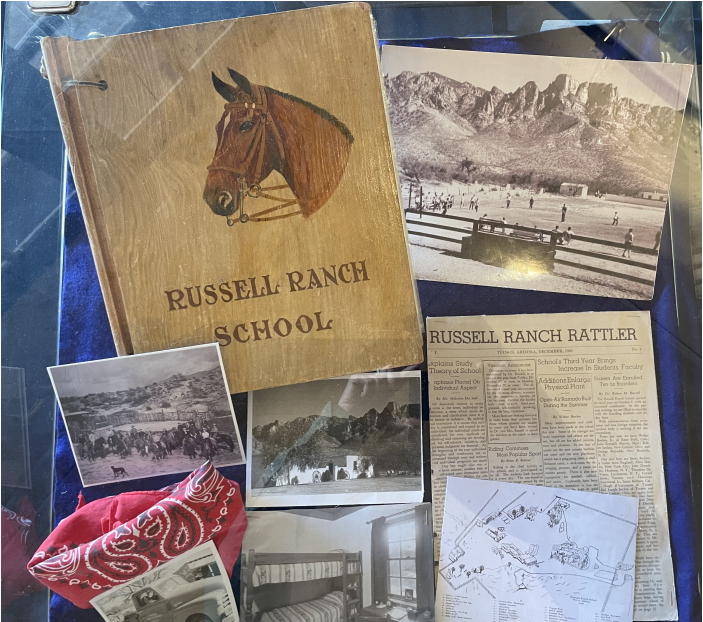
Russell Ranch School OVHS Display Exhibit with books, articles, and pictures

Russell Ranch School OVHS Display Exhibit

Photographs, scrapbook and documents donated to the Oro Valley Historical Society by Debbie Giese and Pat Marshall granddaughters of Dr. & Mrs. Robert Russell founders of the Russell Ranch School.

other resources:

Love: Let Oro Valley Excel – Heather’s Corner: Russell Ranch School for Boys: An Oro Valley Legend for Those Who Attended, January 2015

Learn more about western ranch schools in this article by Kathy Montgomery in the February 2024 issue of Arizona Highways: Reading, Writing…and Ranching

Arizona Origins Facebook post, The Origins of Russell Ranch School taken from Claiming the Desert: Settlers, Homesteaders and Ranchers in Oro Valley, Arizona, 1865-1965 Paperback – August 5, 2018, by Jim Williams

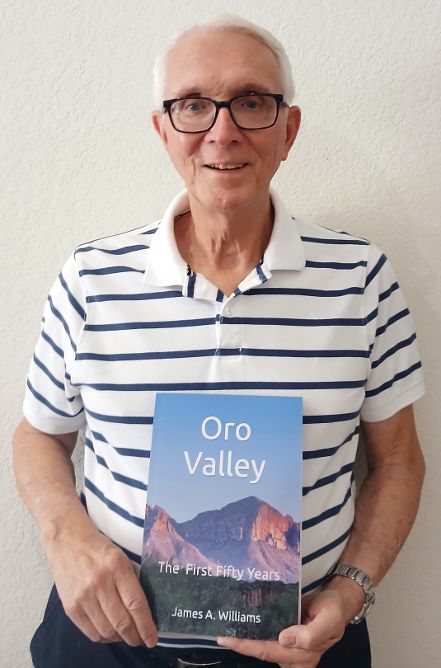
Oro Valley- The First Fifty Years by Jim Williams (AASLH award winning book!) – can be purchased at Amazon, the Western National Parks Store on North Vistoso Village Drive, or in the Pusch House Museum at historic Steam Pump Ranch, with proceeds benefitting the Oro Valley Historical Society. 

Buster Bailey: A Life Carved from Desert Grit, by Devon Sloan, October 2023

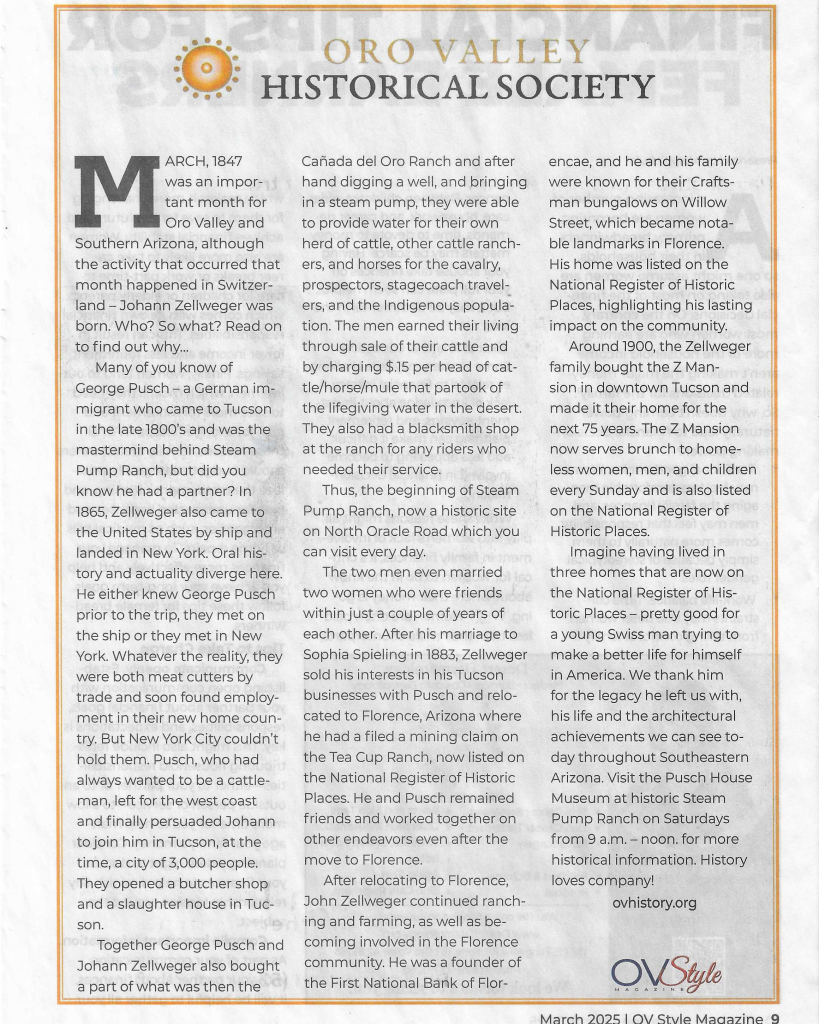
Johann “John” Zellweger – Pusch’s Partner in Building a Legacy

When people think of Steam Pump Ranch, George Pusch usually comes to mind—but another name deserves a place in the story

March 1847 was an important month for Oro Valley and Southern Arizona, although the activity that occurred that month happened in Switzerland – Johann Zellweger was born. Who? So what? Read on to find out why…

Many of you know of George Pusch – a German immigrant who came to Tucson in the late 1800’s and was the mastermind behind Steam Pump Ranch, but did you know he had a partner? In 1865, Zellweger also came to the United States by ship and landed in New York. Oral history and actuality diverge here. He either knew George Pusch prior to the trip, they met on the ship, or they met in New York. Whatever the reality, they were both meat cutters by trade and soon found employment in their new home country. But New York City couldn’t hold them. Pusch, who had always wanted to be a cattleman, left for the west coast and finally persuaded Johann to join him in Tucson, at the time, a city of 3,000 people. They opened a butcher shop and a slaughterhouse in Tucson.

In 1883, Zellweger sold his share of the ranch and the rights to the steam pump to Pusch. It was recorded as a Bill of Sale and not a Transfer of Deed indicating that no one 'technically' owned the land.

In 1883, Zellweger sold his share of the ranch and the rights to the steam pump to Pusch. It was recorded as a Bill of Sale and not a Transfer of Deed indicating that no one ‘technically’ owned the land.

Together George Pusch and Johann Zellweger also bought a part of what was then the Cañada del Oro Ranch and after hand digging a well, and bringing in a steam pump, they were able to provide water for their own herd of cattle, other cattle ranchers, and horses for the cavalry, prospectors, stagecoach travelers, and the Indigenous population. The men earned their living through sale of their cattle and by charging $.15 per head of cattle/horse/mule that partook of the lifegiving water in the desert. They also had a blacksmith shop at the ranch for any riders who needed their service. Thus, the beginning of Steam Pump Ranch, now a historic site on North Oracle Road which you can visit every day.

Sophie and Johann Zellweger. She is standing while John is seated in a chair.

Sophie and Johann Zellweger

The two men even married two women who were friends within just a couple of years of each other. After his marriage to Sophia Spieling in 1883, Zellweger sold his interests in his Tucson businesses with Pusch and relocated to Florence, Arizona where he had a filed a mining claim on the Tea Cup Ranch, now listed on the National Register of Historic Places. He and Pusch remained friends and worked together on other endeavors even after the move to Florence.


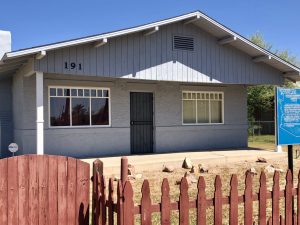
John Zellweger House. 191 North Willow Street, Florence, Arizona

John Zellweger House. 191 North Willow Street, Florence, Arizona

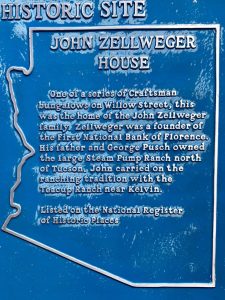
Historic Site John Zellweger Sign Florence Arizona_Cropped

Historic Site John Zellweger Sign Florence, Arizona

After relocating to Florence, John Zellweger continued ranching and farming, as well as becoming involved in the Florence community. He was a founder of the First National Bank of Florence, and he and his family were known for their Craftsman bungalows on Willow Street, which became notable landmarks in Florence. His home was listed on the National Register of Historic Places, highlighting his lasting impact on the community.


Front view of Z Mansion (Zellweger) in 2018. Its light blue and white. 288 North Church Avenue, Tucson

Z Mansion, 288 North Church Avenue, Tucson

Around 1900, the Zellweger family bought the Z Mansion in downtown Tucson and made it their home for the next 75 years. The Z Mansion now serves brunch to homeless women, men, and children every Sunday and is also listed on the National Register of Historic Places.

OVHS Fundraiser at Z Mansion in 2018 outside tables and guests

OVHS Fundraiser at Z Mansion in 2018

Imagine having lived in three homes that are now on the National Register of Historic Places – pretty good for a young Swiss man trying to make a better life for himself in America. We thank him for the legacy he left us with; his life and the architectural achievements we can see today throughout Southeastern Arizona. Visit the Pusch House Museum at historic Steam Pump Ranch on Saturdays from 9 a.m. – noon. for more historical information. History loves company!
ovhistory.org

Written by Devon Sloan, Secretary of Oro Valley Historical Society for OVStyle MAGAZINE.  March 2025 | OV Style Magazine 9


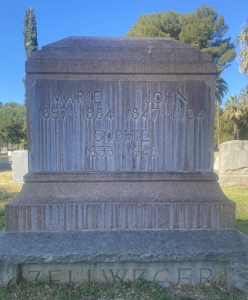
Gravesite:
John Zellweger Gravesite with wives Marie and Sophie at Evergreen Memorial Park, Tucson, Arizona

John Zellweger Gravesite at Evergreen Memorial Park, Tucson, Arizona

John passed away on March 1, 1924, and is buried at Evergreen Memorial Park in Tucson, Arizona at plot Block 16, Section C, Grave 3-2 alongside his wives, Marie and Sophie.  Find their grave.


The Railroad That Nearly Reached Oro Valley

Written by Devon Sloan, June 2023

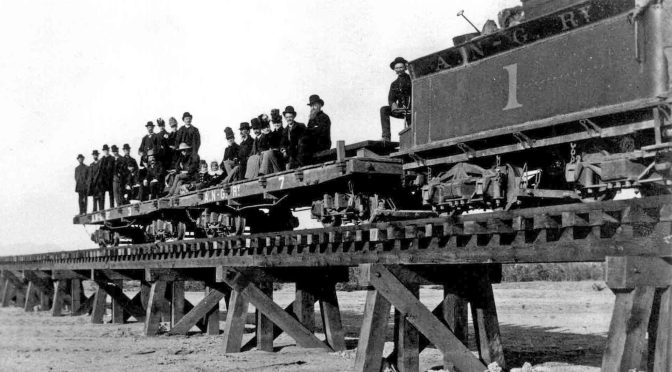
Narrow Gauge Railroad with Men Standing on it

Narrow Gauge Railroad

All Aboard!!! We could have heard those words at a train station as close as Magee and Oracle Roads if the Directors of the Arizona Narrow Gauge Railroad Company had succeeded. On June 1, 1886, work resumed on a 386-foot-long bridge across Rillito wash that had been started at the train depot in Tucson in 1883. Work continued through the summer, but a downpour destroyed the Rillito wash bridge in September 1887, and construction was again stopped.

Narrow Gauge Locomotive

Narrow Gauge Locomotive


It was a few months later that George Pusch, his partner, John Zellweger, and others reorganized this narrow-gauge railroad to standard gauge and named it the Tucson Globe and Northern Railroad Company. Their vision was to complete the job to link Tucson to Globe (110 miles) and then to Espanola, New Mexico for a total of 430 miles. The goal was to transfer freight and passengers through the southwest. The fees would have been 15 cents/ton/mile for freight and 10 cents/mile for passengers.

Map of Arizona Narrow Gauge Railroad through Oro Valley

Map of Arizona Narrow Gauge Railroad through Oro Valley


Because of financing issues, the railroad was never completed. So, instead of a train station at Oracle and Magee, we are fortunate enough to be able to visit Tohono Chul!

other resources:

Arizona Narrow Gauge Railroad, by PacificNG.org, December 28, 2015

Oro Valley Was a Part of the “Arizona Narrow Gauge Railroad”, as featured in LOVE (Let Oro Valley Excel)

The Arizona Narrow Gauge Railroad – Tucson’s Forgotten Railroad, by Julian Sanchez, published June 18, 2024

Romero Ruins and the Search for Riches in the Santa Catalinas

The 1875 rumors that sparked prospectors’ dreams—and the real story of Francisco Romero’s historic ranch.

Written by Devon Sloan, March 2024

There’s gold in “them thar hills”!???…or so a March 1875 issue of the Arizona Citizen implied.

Portrait of Francisco Romero

Francisco Romero

The “hills” referred to are in the area we now know as Catalina State Park, near the mouth of Romero Canyon. Francisco Romero and his partner, William Zeckendorf (who was also the owner of Zeckendorf Mercantile in downtown Tucson at the time), found a rich vein of gold and silver in the mountains. The article in the newspaper was probably published to entice investors for their company. That didn’t work, however, and no gold or silver was ever mined in this area on a large-scale basis. There are plenty of accounts, however, of miners, who with their burros and camping gear and high hopes, made many trips to discover on their own what treasures might be found in the Catalina Mountains.

Romero Ruin at Catalina State Park- Rock Foundation

Romero Ruin at Catalina State Park

Francisco Romero, probably the first non-native settler of the Cañada del Oro area, established a cattle ranch, centering his spread on an enclosed house compound in a former Hohokam village. We know this area today as Romero Ruins. His family was well established in the Tucson area, having come to Arizona as part of a Spanish presidio army in the late 18th century. Romero lived on this ranch intermittently from 1869 to his death in 1905. Due to constant threat of Apache attacks, he and his family lived most of their days in the city of Tucson and kept some cattle on the ranch in the Catalinas.


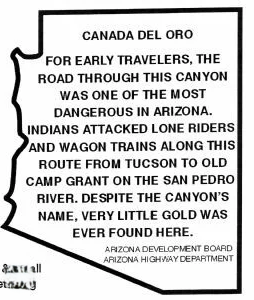
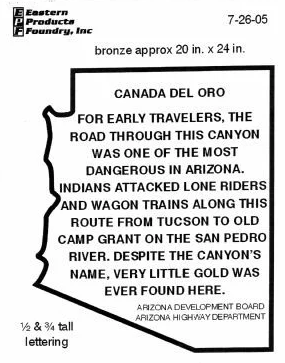
Cañada del Oro Historical Marker Information from the Historical Marker DatabaseMembers of the Romero family occupied land in this same area until 1930. His only son returned to Cañada del Oro and built a new ranch house in 1889, just below the ridge where his father’s house stood. The remains of this house survive today and are listed on the National Register of Historic Places, which includes Romero Ruins.

Find more interesting information on the Historical Marker Database; it’s actually missing from Arizona Route 77 just north of Steam Pump Ranch.

Other Resources:


Romero Ruin Sign at Catalina State Park with an Arrow

Romero Ruin Sign at Catalina State Park

Romero Ruin (Catalina State Park) by Archeology Southwest

Take a hike!  Romero Ruins Interpretive Trail

Catalina State Park: A Vision Realized, by Devon Sloan


The Birth of Oro Valley Country Club

Written by Devon Sloan, January 2023

Birdie, Bogey, Chip Shot and Fore! were words heard more frequently than ever in Oro Valley when in January 1959, the Oro Valley Country Club opened the golf course. No more did cattle roam the washes and foothills on that land!

In the mid-1950’s, Lou Landon, a developer from Chicago, visited Tucson frequently and loved playing golf. The only courses at that time were Tucson Country Club, El Rio Country Club, and Reid Park. He thought a course needed to be added northwest of Tucson for the golfers in our area and worked with Hank Leiber and Joseph Timan to purchase part of the Canyon del Oro Ranch from the Rooney family. 365 acres were purchased in May 1958, and a contract was signed in July of that year to have the course completed by December 31 of that year. Golfers definitely celebrated on New Year’s Eve!

Black and white photo of Original Club House Courtesy of Oro Valley Country Club

The original plan for the area was to include a huge subdivision with trailer park, guest ranch, hotel, shopping, professional buildings and more. We can only imagine how happy the current 234 homeowners in the Oro Valley Country Club Estates are that those plans never came to fruition.

And thanks to the homeowners in 1974, when Oro Valley was incorporated, we adopted the name of Oro Valley for our town instead of Palo Verde!  To learn more, read How Did Oro Valley Get Its Name.

Other resources: 2.5 SQUARE MILE Oral History Project, “You don’t have to be famous for your life to be historic.”

Catalina State Park: A Vision Realized

Written by Devon Sloan, September 2024

Catalina State Park Entrance sign with mountains in the background

Catalina State Park Entrance

When classes at the University of Arizona resumed in 1974, Dr. Stanley K. Brickler, Professor in the School of Renewable Natural Resources at the University of Arizona, met with State Parks Director, Dennis McCarthy, and offered the services of one of his classes to develop a master plan for Catalina State Park.

Dr. Brickler secured the approval for his class of 19 students to work with the Agency’s planning staff to develop the plan. This came after Representative Charles King had introduced House Bill 2280 early in the 1974 session to establish Catalina State Park. The reason behind this was that a proposed development called Rancho Romero was poised to accommodate 17,000 people with housing units surrounding golf courses along the Canada del Oro and Sutherland Washes. Of course, residents preferred preserving the area as open space.

In December 1975, the State Parks Board agreed to swap land which had been purchased by homesteaders, wealthy easterners, and local developers for what would become part of our beloved state park. And then, two years later, in December 1977, the final plan for the park was approved by the State Parks Board.  This led to the dedication of Catalina State Park in 1983!


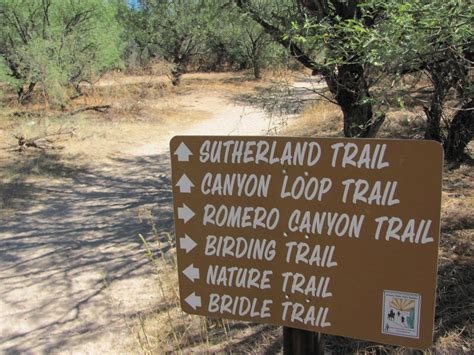
Trail Sign at Catalina State Park with Trail Names and directional arrows

Trail Sign at Catalina State Park

Marjorie Kriegh: A Woman Who Helped Build Oro Valley

Written by Devon Sloan, February 2024

We’ve all heard the saying, “Behind every good man, there is a woman”.  In honor of Women’s History Month, and as a prelude to Oro Valley’s birthday next month, we are featuring Marjorie Kriegh, the woman who was “behind” the Father of Oro Valley, James D. Kriegh.

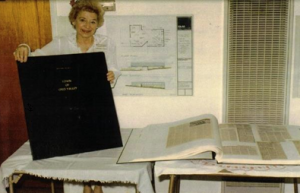
Marjorie Kriegh Displaying Large Books

Marjorie Kriegh

Born in 1926 in Pennsylvania, she grew up with two sisters and a brother in Mentor, Ohio.  Always considered the baby of the family (although not the youngest), she loved to dance and became a successful professional ballet and tap dancer.

She married her high school sweetheart, William “Bill” Rogers, and both were active in the Civil Air Patrol. Marjorie obtained the rank of major and served as an Aircraft Observer, Operations Officer, and Communications Officer during search and rescue missions.  Bill served in combat during World War II and was awarded the Purple Heart.  He was a pilot for the Civil Air Patrol and became a Squadron Commander when the couple moved to Tucson in the 1950’s.

Bill and his observer were killed on May 14, 1959, in a plane crash while performing a Civil Air Patrol Search and Rescue mission when his aircraft hit power lines near Ray, Arizona after he and his crew had located a missing aircraft.  Marjorie was working the radio on that fateful day.

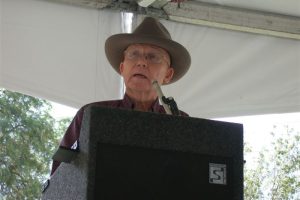
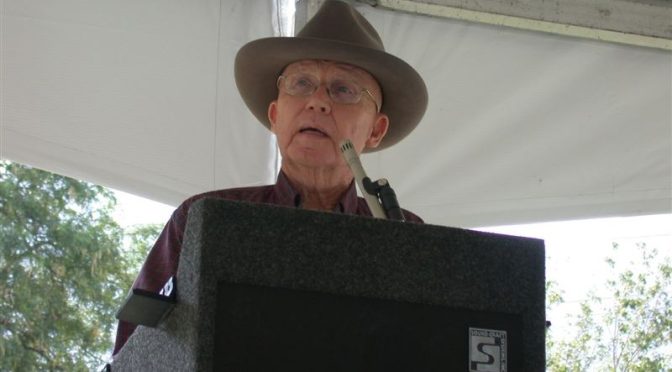
Jim Kriegh Speaking Behind Podium Outdoors

Jim Kriegh

In Tucson, the Rogers were living at an apartment complex where they built a close-knit group of friends.  Among this group was James D. Kriegh, a fellow resident.  Bill’s death was traumatic for Marjorie, and the friend group at the complex supported Marjorie tremendously and encouraged Jim and Marjorie’s friendship.  That friendship grew over the years and ultimately, Jim and Marjorie were married in December 1961.  The two purchased a home, started a family, and raised two children in what would become Oro Valley.

While working as a legal secretary at a local law firm, Marjorie was also an active crafter and a skilled seamstress making and decorating clothes.  In addition, she was a full-time mom and very energetic homemaker. She actively supported her kids in dance (tap and ballet), Cub Scouts, Webelos, Brownies, and sports teams such as basketball, softball and baseball.  She and Jim even sponsored and coached a little league team, “SAE” (Structural Adhesive and Engineering Company).

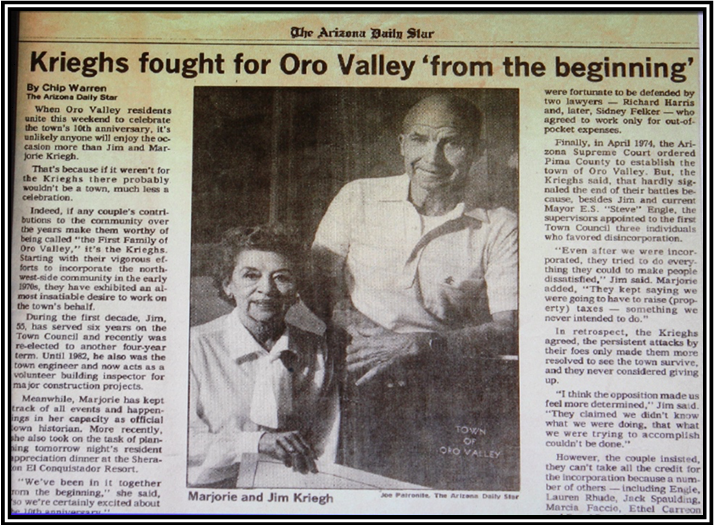
Marjorie was very active in the early incorporation efforts of the Town of Oro Valley.  She was always positive in those efforts and put in long hours.  She co-sponsored meetings with Jim, attended other meetings, helped build networks within the legal profession, and physically distributed information (letters and flyers – there was no internet back then!). The Town of Oro Valley keeps archives of the Town efforts during this time, most of them put together by the Town’s first and only Town Historian – Marjorie Kriegh.

Kriegh's Fight for Oro Valley from the Beginning - Newspaper Article, - Daily Star April 26, 1984

Kriegh’s Fight for Oro Valley from the Beginning – – Daily Star April 26, 1984

Later Jim and Marjorie’s son, Kevin, became a private pilot in the early 1980’s.  Marjorie reaffirmed her passion for aviation and her commitment to her family by being Kevin’s first passenger.  Due in part to his mom’s passion, Kevin went on to become a professional pilot.  And so, behind that successful pilot is also a woman!  Celebrate Women’s History Month and remember Marjorie Kriegh for her full life and with thanks for her contribution to Oro Valley!

Other resources:

Visit our Oro Valley History page to explore the town’s origins—its naming, the beginnings of OVHS, and Marjorie K. Kriegh’s insightful article, “The Making of a Town.”

From Homestead to Hospitality: Watson and Nason Families

Written by Devon Sloan, May2025

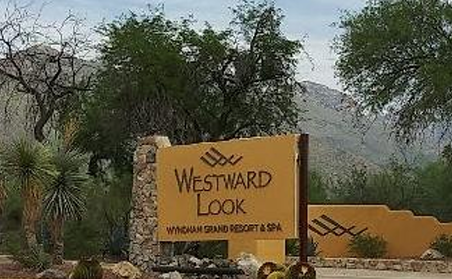
May 21, 2021, wasn’t that long ago, and that’s the day the Westward Look Wyndham Grand Resort and Spa officially joined the Town of Oro Valley. But did you know that this beautiful resort started out as a home built less than 6 months after Arizona became a state in 1912?

William and Maria Watson purchased 172 acres of homestead land when Tucson was a community of 13,000 residents, and a dirt road was how people traveled from the Tucson downtown to this elegant hacienda-style home, usually taking a couple of hours to do so. It wasn’t until the 1920’s that tourism became a part of Tucson’s economy, and 15 cottages around the property were built to provide visitors with a unique southwest experience.

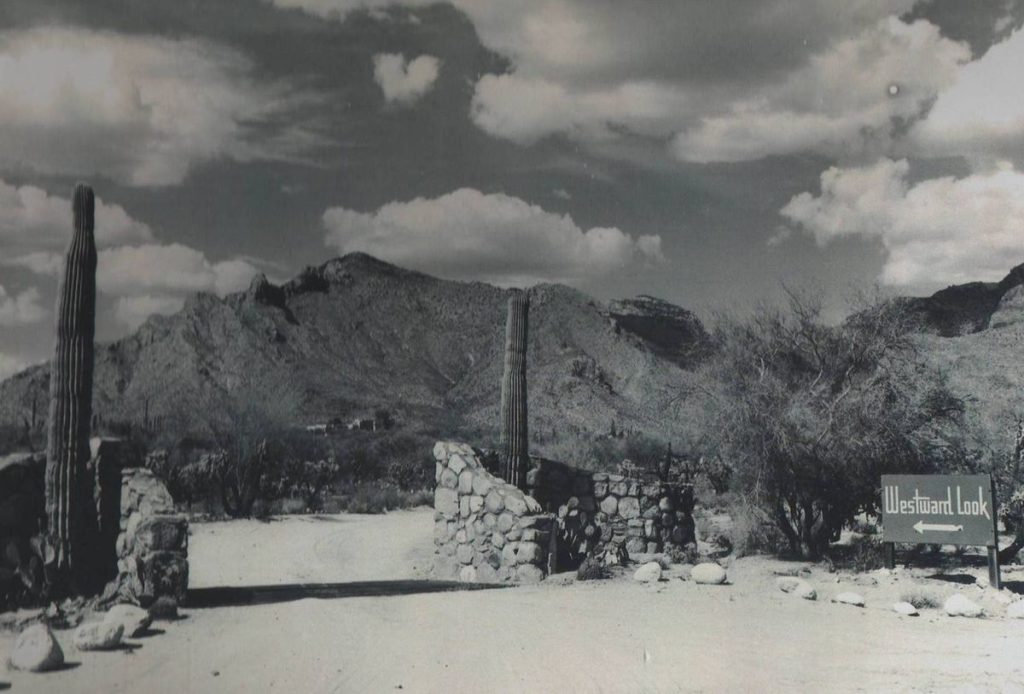
Westward Look Dirt Trail Entrance


The property wasn’t called Westward Look until the 1940’s when the Nason family operated it as a dude ranch and finally added air-conditioning! Mrs. Nason named the property after the closing line of a poem by Arthur Hugh Clough “westward, look, the land is bright.”

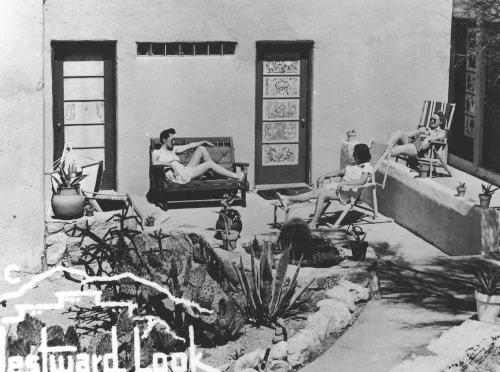
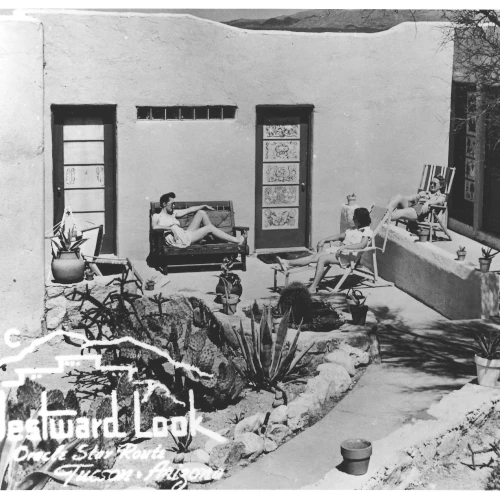
Westward Look Vintage Logo and Ladies SunbathingThis era brought Hollywood figures from both sides of the camera to the resort for fun, relaxation, and the quieter southwest atmosphere. Trail rides and chuckwagon dinners were part of that experience. In the 1950’s, the resort did not have a state liquor license, but guests could bring their own liquor and consume it on the premises.

The Santa Claus we all know and love from the early Coca-Cola commercials was born here in that decade, as well. A commercial artist, a frequent visitor for two decades, used the Nason’s two children to paint that picture we all remember of grateful children and a relaxed Santa enjoying the cold refreshing soft drink.

In the 1960’s telephones were added in each guest room. In the 1970’s, under new ownership, meeting rooms, restaurants, tennis courts, and pools were added, and it became Tucson’s first resort. The ownership changed again in the 1980’s, and since then, guest rooms, a ballroom, a rooftop terrace, and a spa have been added, and tennis courts and pool areas were modernized. Summer rates at that time were $29.00 for those willing to brave our high temperatures!

Now within the Wyndham Hotel family, the property has changed since being one family’s homestead 113 years ago. You can still feel the welcome, the charm, and the hospitality emerge from the lobby to the Gold Room Ballroom, the Overlook Bar and Grill, the Palm Room (one-time living room), and the beautiful walking trails leading to tennis courts and stables that grace the property. When you look Westward, the land is definitely bright!

Above vintage photos are from Westward Look Historic Photo Gallery. Check it out!

Westward Look Yellow and Brown Entrance Sign

Walking Tour: Discover Florence’s Hidden History

Historic Site John Zellweger Sign Florence Arizona_Cropped

Historic Site John Zellweger Sign Florence Arizona

Looking for a day trip with a dose of history? Take a drive to Florence, Arizona that was once a settlement of the Hohokam due to its proximity to the Gila River. The town was founded in 1866 by Levi Ruggles, an American Civil War veteran and Indian Agent.  In 1875 the Silver King Mine was discovered and the town bustled with activity.

Down download the Historic Florence Walking Tour brochure, grab a drink and stroll through town using the well-placed, easy-to-find interpretive signs. Make sure to include 191 N. Willow Street, where you’ll find the Craftsman-style home of Johann (John) Zellweger — the longtime friend and business partner of George Pusch. Then wrap up your visit with lunch or dinner at one of the local restaurants.

Learn more about John and his contributions to Tucson, Oro Valley, and Florence!

And before you head home, don’t miss the Pinal County Historical Museum at 715 N. Main Street—an amazing spot only three minutes from Downtown Florence!

John Zellweger House. 191 North Willow Street, Florence, Arizona

John Zellweger House. 191 North Willow Street, Florence, Arizona

Historic Florence Planter Box on Downtown Florence, AZ Sidewalk. March 2025

Historic Florence Planter Box


Find more things to do in Explore More section of the OVHS website and other historic towns, landmarks, and museums within an easy car drive!  Including Discover the Hohokam – Three Sites You Shouldn’t Miss!

The Making of Rooney Ranch

Written by Devon Sloan, July 2025

The shopping area we all now know as Rooney Ranch (Lambert Lane and Oracle Road) actually
started way back in July 1895 in Nebraska when Laurence Francis Rooney was born.

How, did this…                                                        become this?

Oro Valley Before Development

Entrance to CDO Ranch

Rooney Ranch Shopping (Photo by Barclay Group)

Rooney Ranch Shopping (Photo by Barclay Group)


Originally, this area was part of the Cañada del Oro Ranch, a Spanish land grant, homesteaded by Oro Valley’s first non-native rancher, George Pusch (a German immigrant who also owned Steam Pump Ranch). You can see in the black and white photo above that the land crossed what we now know as Oracle Road and extended into Catalina State Park, which was open land at the time. In the 1930s, Mr. Rooney visited Tucson, and like so many of our snowbirds today, he loved our desert life. Owner of the Manhattan Construction Company in Oklahoma, he was a mover and shaker and frequently visited with Jack Procter, Manager of the Pioneer Hotel, who lived on Steam Pump Ranch after the Pusch family.

Portrait of Laurence Francis Rooney Sr

Laurence Francis Rooney Sr.

The boundaries of Steam Pump Ranch abutted the Cañada del Oro Ranch to the north. He kept a few cattle on the ranch, and the family would visit this area as snowbirds from October until May until the 1950s while their boys attended the Russell Ranch School, a few miles north on Oracle Road. Interestingly, the Cañada del Oro Ranch was managed at that time by George W. Pusch, son of the original owner of the ranch.  More on Russell Ranch School on Arizona Origins Facebook page.

Eventually, Jack Procter sold many acres of the Steam Pump Ranch east of Oracle Road to Mr. Rooney. In 1958, the Rooney family sold 375 acres of the Cañada del Oro Ranch to a gentleman who had a different vision than ranching for the area. He teamed up with Lou Landon, a Chicago businessman and eventually Oro Valley Country Club Estates and the surrounding golf course materialized. (Watch the video, where wife, Donna Landon, talks about her husband, Lou’s vision behind Oro Valley Country Club Estates.)

After Laurence Rooney’s death in 1960, his sons subsequently and at different times, became Presidents of Manhattan Construction Company. The company is now run by the 5th generation of the Rooney family.

The 4th generation of the Rooney family played a significant role in shaping Oro Valley’s growth in the late 1990s. The mixed-use development at Lambert Lane and Oracle Road is part of the Cañada del Oro Ranch and includes retail, dining, auto repair, hardware, banking, health and beauty outlets and provides Oro Valley with a hub that serves our community with convenient access to all these amenities, contributing to the overall development and appeal of Oro Valley.

Rooney Ranch Area Development Begins

Rooney Ranch Area Development Begins

Under Laurence Rooney’s vision for Manhattan Construction Company, and his sons’ development prowess, naming this area Rooney Ranch seems fitting to show our appreciation for the contribution of the Rooney family and their commitment to enhancing Oro Valley.

1998 – Supermarket-now Frys, Bank of America, Burger King-now Starbucks, Pizza Hut-now
Sherwin Williams.

A Hard-Fought Birth: Arizona’s Road to Statehood

Written by Devon Sloan, February 2025

It wasn’t an easy “birth”, and one Oro Valley connection was very much involved. That person was George Pusch, owner of Steam Pump Ranch. Not only was he a cattleman, Pusch was also owner of an ice storage facility and a butcher shop located in Tucson, a director of the Arizona National Bank, a member of Tucson’s city council, and an Arizona Territorial Legislature member. (Remember, we weren’t a state, and still a part of New Mexico, thus territory instead of State legislature). But how he was involved with the “birth” of Arizona, was as a representative to the 1910 Arizona Constitutional Convention. It took 2 years after that convention met for Arizona to be “born”. You ask, “Why so long?”

Arizona Flag

A little background – after the Gadsden Purchase was signed on December 30, 1853, Arizona and New Mexico were now part of the United States, no longer a part of Mexico. Throughout many years, the Arizona legislature sent documents to the U.S. House of Representatives requesting statehood, and finally in June 1910, Congress passed an act to authorize the people of the New Mexico and Arizona Territories to form state constitutions and state governments, which would provide for the admission of each state (separately) into the Union once those constitutions were approved by Congress. The “birth” of Arizona was imminent.

Signed Photo of Participants of Arizona Constitutional Convention Signed, December 10, 1910

Arizona Constitutional Convention Signed, December 10, 1910

Not so fast! The progressive constitution which Arizona presented included a statement that included the ability to recall public officials because it was thought at the time that they were controlled by large companies and the railroads. George Pusch and four other representatives from Pima County disagreed with that and refused to sign the constitution as drafted. It took two more years for Congress to approve a revised Arizona constitution which removed the recall provision after voters agreed. President Taft finally signed the proclamation which admitted Arizona to the Union on February 14, 1912. That’s definitely a day we can all remember since Arizona is high on the list of things we love!

And George Pusch? He undoubtedly signed on to the constitution which was presented to President Taft…however during the next election cycle, that recall provision was voted on and added back into the Arizona constitution, an act with which Pusch certainly disagreed. However, it was done. Arizona was now a state, and Pusch lived in the STATE of Arizona until his death in 1921.

Rest in peace, George, and thanks for your hard work giving “birth” to Arizona!

President Taft Signing Proclamation Making Arizona a State

President Taft Signing Proclamation Making Arizona a State


The Wilson Legacy and the Making of Tohono Chul

Written by Devon Sloan, April 2025

April 19, 1985, was such a special day in southern Arizona, as that’s the day that Tohono Chul
Park was formally dedicated as a desert preserve. Even though the corner of Oracle and Magee
was not as busy with traffic as it is now, residents of our area had to be delighted to have such a
peaceful respite at the edge of our community. Richard and Jean Wilson, the benefactors of
Tohono Chul, also undoubtedly finally felt some peace, as their journey to create the park we
visit and love had finally come to be after almost 20 years.

However, the story doesn’t start with Richard and Jean Wilson, but goes back to Richard
Wilson’s great-great-great grandfather who had founded a museum in Philadelphia’s
Independence Hall, housing paintings and Native American artifacts. Richard’s uncle founded
the Museum of Northern Arizona to display and preserve regional Native American crafts, and
his mother was a collector of contemporary Southwest Native American arts, some of which are
part of the permanent cultural collection at Tohono Chul now. Richard, himself, was a geologist
who taught at the University. You can see that it was an incredible foundation upon which this
legacy would continue.

In the 1920’s the land on which Tohono Chul sits was part of groves of citrus trees owned by the
father of Gene Reid for whom Tucson’s Reid Park and Zoo is named. This land was subsequently subdivided, and from 1937 until 1966, the land was sold to different families as an 80-acre parcel. In 1937, what is now the Exhibit House was built as a Santa Fe style home for the Wacks, the family who first purchased the citrus grove property. In 1948, a different family donated part of the property to the Catholic Diocese of Tucson for the site for St. Odilia’s Catholic Church.

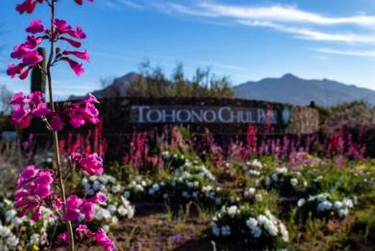
Tohono Chul Sign with pink flower in front

Tohono Chul Sign

In 1963, the sixth family who lived on the land built what is now the Bistro as a hacienda-style
home with a central passageway leading to a courtyard (where we can enjoy a Chul Sunrise after
a stroll through the park or visit to the La Fuente Museum!)


The Wilsons purchased what is now the Bistro in 1966 and, lived there until 1974, eventually
owning 37 acres of the 80-acre parcel. The Lomaki House (now used for private events, classes,
and meetings) was built as a guest house by the Wilsons, and in 1968 they purchased the home
that is now the Exhibit House, donating the space to several non-profit organizations as a
halfway house or youth residence.


An avid reader, Jean Wilson opened The Haunted Bookshop on the property in 1979, where
local authors were featured not only with the sales of their publications but also readings,
classes, and events. The store was very popular, and once it was up and running, the adventure
began to make the park a reality as the Wilsons walked through the park making trails and
installing markers to denote various plants on the property.

It was during the 1970’s that developers first approached the Wilsons about making the land
commercial, and when Ina Road was to be widened, Richard Wilson demanded that Pima
County move every saguaro and replant it on their property. In 1995, development again tried
to encroach on the park with higher density rezoning. A member of Tohono Chul aided the
Wilsons in acquiring the property in 1996, and when the bookstore closed in 1997, the Wilsons
donated that land to what was now Tohono Chul Park, Inc., a non-profit foundation, bringing
the total acreage to its current 49 acres.

Other Resources:

A brief history of Tohono Chul (this is a link to their website)

Visit the gardens, galleries, and bistro at Tohono Chul!

Buster Bailey: A Life Carved from Desert Grit

Written by Devon Sloan, January 2025

In June 1927, Buster Bailey moved to Arizona from Texas when he was 16 with his parents and one sister (there were 5 other siblings). The family bought a ranch formerly homesteaded* by Francisco and Teodoro Marin north of the entrance to Catalina State Park, on both sides of Oracle Road (paved only with oil and gravel), as well as a gas station in that vicinity.

Buster worked on the farm but returned with this family to Texas during the years leading up to
the Depression. However, he came back to Tucson where he worked many jobs, mostly digging wells for various families in the area. Wells were between 25 – 100 feet, and digging was a very dangerous job since the walls of the well could collapse on the workers below. That didn’t deter Buster – the Depression was coming, and Buster needed to work.

Bootlegging became a great alternative. (Remember, prohibition in Tucson started in 1915.) Buster made the “adult beverage” in the Catalina Mountains and drove a Ford Model A to Tucson where he would sell it to various locales willing to pay his asking price of $22.00/gallon. (It cost him between 65 – 85 cents to make.)  Once prohibition ended, Buster worked on farms, as a handyman, and as a mechanic and also leased a ranch of about 1,000 acres that was located in Catalina State Park.

In 1942, Buster enlisted in the military and handled 15 – 20 jeeps and trucks in the motor pool in California where he was stationed, raising to the rank of Sergeant. Transferring in 1944 to New Guinea, his Captain had heard of his “adult beverage” expertise and asked him to make some moonshine. After having the camp doctor test it, Buster made 10 gallons each week for his comrades in arms. It is unclear whether that was the same Captain that took away Buster’s Sergeant stripes for refusing to take a medicine that prevents malaria. (Did Buster know at the time that it could also cause neurological damage?)

Buster returned to the Oro Valley area after the war and had many odd jobs. He even lived on Steam Pump Ranch during the Leiber era, and loved to roam our area, exploring our mountains and streams. He was actually a prolific writer and kept an amazing journal about his life, along with stories and even poems about cowboys. Although he wasn’t a cowboy by any means, he knew their way of life and shared it using his own imagination. The library at the Arizona Historical Society has these manuscripts, and they are really interesting to read and to learn more about his life. (His handwriting is even pretty good, for dropping out of school at the end of 8th grade!)

*Although we don’t have an actual map of the area, here’s closer idea of the location of the ranch:

The Francisco Marin property, 160 acres along the west side of Oracle Road, was south of Tangerine and opposite the entrance to Catalina State Park. Teodoro’s property was on the east side of Oracle Road at the entrance to the park today.  Buster Bailey’s family bought both in the early 1920’s.  Below is a picture of a building where Buster lived when he worked in Tucson until the family sold the ranch and closed the gas station due to hard times during the depression.

Black and white photo of Arcadia Russel Ranch School Previously Buster Bailey House

Arcadia Russel Ranch School Previously Buster Bailey House

In 1939, Robert M. Russell purchased the property on the west side of Oracle Road and started the Russell Ranch School, a boys’ boarding school.  Many of the buildings from that school are still standing on the property.  To find the area, if you go to the entrance to Catalina State Park, before you go into the park, take a left towards the Rolling Ranch Riding Academy and the Cielo Tierra RanchSusan Blake is the owner/manager of the property.

Other references:

Read more by Devon Sloan, THE RUSSELL RANCH SCHOOL: AN EDUCATIONAL FRONTIER

To get a feel for more of Buster Bailey’s personality, pick up Barbara Marriott’s book Canyon of Gold: Tales of Santa Catalina Pioneers (paperback – January 2005) and read the chapter “The Hiker and the Mountain Man”. Buster will come alive for you there!

Buster Bailey Sitting in a Chair Wearing a Cowboy Hat

Buster Bailey

Doesn’t he look like the kind of guy who would perform dangerous jobs, be a bootlegger, roam our mountains, tell great stories and be very missed when he died in Tucson at the age of 84?

Buster Bailey Gravesite Headstone in Grass

Buster Bailey Gravesite Headstone at Evergreen Memorial Park, Tucson, AZ

Buster is buried in Evergreen Memorial Park in Tucson, Arizona (Pima County), Block 11, Sec. B, Row 1, Grave 9

Suffrage, Temperance, and a Taste for Moonshine

Written by Devon Sloan, June 2025

On January 1, 1915, Prohibition reached Arizona – 5 years before it took effect throughout the rest of the United States! How did that happen?

Well, there is a theory that it started because women got involved, but don’t blame them – they were on a different mission, just trying to claim their rights and responsibilities of citizenship!  In the early 1800’s the women’s suffrage movement started. It slowed during the Civil War and picked up afterwards when the National Women’s Suffrage Association started and eventually became the National American Women’s Suffrage Association in 1890.

In the West women may have enjoyed a favored status because of their scarcity. Some Western males apparently were drawn to suffrage as a way of enticing women to migrate to the West. Suffrage may also have been viewed by Western males as a means of paying a debt to women for hardships they had to endure as pioneers not used to the Western ways. Some native-born Westerners wanted both prohibition and suffrage, and then there were the miners and European born who wanted suffrage, but not prohibition. Some people also came from backgrounds where alcohol was not a common part of life, which made them more receptive to the idea of prohibition.

In November 1912, the year Arizona became a state, suffrage was on the ballot, and 65% of the men supported it. In December that year, the discussion shifted to include temperance which gained significant traction in Arizona due to the movement’s arguments about the negative impacts of alcohol on society. This was a time of great social and political change in the United States, and citizens were often interested in using the government to solve social problems. Prohibition was seen as one way to do this. Women pointed out that due to drinking, the cost of living increased, showing that millions of bushels of grain were being used to manufacture whiskey and beer. This made pork, lard, and meat more expensive. They also pointed out that money should be used for irrigation and not liquor. In addition, women believed that prohibition would help to address social problems such as poverty, crime, and domestic violence.

Due to significant opposition to the law, particularly from businesses that relied on alcohol sales, it still took three years to get the law passed but pass it did and was law until 1933. But between 1915 and 1933, people didn’t stop drinking in Arizona or Oro Valley.

According to Buster Bailey, a true character who lived in the Oro Valley area from 1927 to 1995, there were stills throughout Catalina State Park and even one on the historic Steam Pump Ranch. Although Buster had many jobs throughout his time in Arizona, his real claim to fame was as a bootlegger, operating his still near the waters of the now dry Buster Spring where you can see what remains of his still. Buster said that although it was illegal to buy or make whiskey, it was easy to buy the ingredients for it in town – sugar, cracked corn, oak chips (for color), Fleischmann’s yeast. With some water and some patience, you could have good moonshine within a week. The ingredients cost about $1.00/gallon and would sell for $22.00/gallon at the beginning of prohibition. When Buster was in the Army, stationed in New Guinea, his captain heard about his expertise, and suggested he make some moonshine. After being tested by a camp doctor, Buster was making about 10 gallons per week for the troops.

Read more about Buster Bailey.

Mount Lemmon’s Namesake: A Trailblazing Botanist

In 1880, on Thanksgiving Day, Sara Allen Plummer, the woman for whom Mount Lemmon was named in 1881, married fellow botanist John Gill Lemmon. Sara, a courageous woman, had journeyed west alone for health reasons and blossomed into a self-taught botanist and gifted artist. Together they discovered new plant species, and Sara’s detailed illustrations carried their findings far beyond the desert, delighting scientists and audiences wherever she presented her works and exhibits.

Want to learn more about Sara?

The Forgotten Botanist: Sara Plummer Lemmon’s Life of Science and Art, by Wynne Brown (Paperback, November 2021)

Life stories: Mt. Lemmon’s namesake was female explorer, by Kimberly Matas Arizona Daily Star, Updated 

Sara Plummer Lemmon: Pioneering Botanist, by Erin Blakemore, JSTOR Daily, March 11, 2015

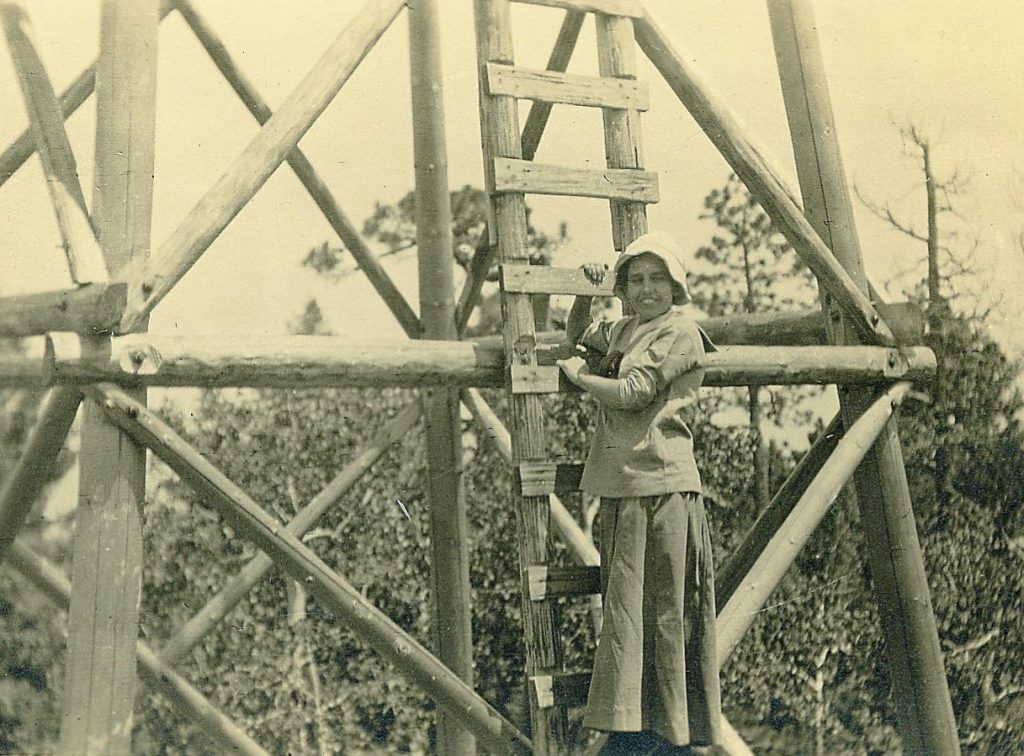
Gertrude Pusch in Bonnet on Ladder on Lemmon Rock Lookout Tower

Gertrude Pusch in Bonnet on Ladder on Lemmon Rock Lookout Tower

Man with Two Women on Horseback in front of Lemmon Rock Lookout Tower by Hank Soldier's Camp

Man with Two Women on Horseback in front of Lemmon Rock Lookout Tower by Hank Soldier’s Camp.  Gertrude Pusch is on the horse to the right.

Just Kidding Around!

Did you know that we offer private tours for groups of all sizes (and ages?)

School Field Trip with Paul Canez Grinding Corn_October 2025

School Field Trip with Paul Canez Grinding Corn, October 2025

School Field Trip with Paul Canez_Boy Picking Melons_October 2025

School Field Trip with Paul Canez Cutting Fresh Melon_October 2025


School Field Trip with Paul Canez and Kids in Pit House_October 2025

School Field Trip with Paul Canez and Kids in Pit House_October 2025

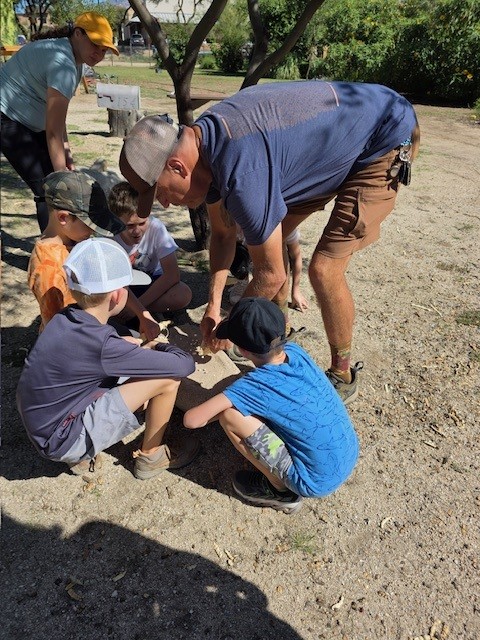
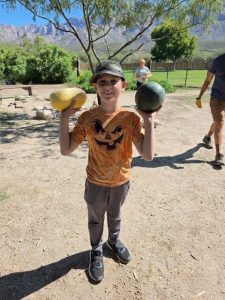
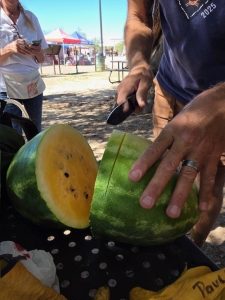
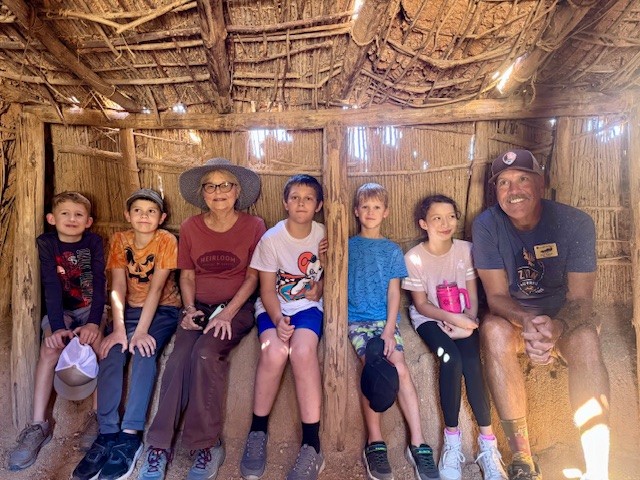
Our naturalist, Paul Canez, recently had a blast with a school group and their parents. The adventure began at Honey Bee Canyon exploring plants and wildlife.  They then traveled the short distance to Steam Pump Ranch to the Heritage Garden to visit a replica Hohokam home, grind corn on a metate, and pick fresh veggies right from the garden!

Gather your group and request your own private tour!


The Pusch House Museum Operated by the Oro Valley Historical Society

This is a self-guided exhibit – admission is free, but donations are appreciated!
Gertrude Pusch Trunk and Wedding Shawl in Shadow Box at Pusch House Museum

Gertrude’s Trunk and Wedding Shawl

  • Room 1: Learn about George Pusch and his family, owners of Steam Pump Ranch from about 1875–1921.

  • Room 2: Discover the Jack Procter family, who owned the ranch from about 1940–2007, when the Town of Oro Valley acquired it through a Pima County Bond referendum.

  • Room 3: Come back often as the exhibits in this room change about every 5-6 weeks throughout the season.  Check out Calendar of Events to find details on the current and future exhibits.  Also featured on the wall of this great room is a permanent display “A Place in Time” that timelines Oro Valley’s history from 500 AD to 2007.

  • Room 4: See a Petroglyph boulder, and the Meteorite Collection of Jim Kriegh (1928–2007), the founder of both the Town of Oro Valley and the Oro Valley Historical Society.

Want the latest on OVHS events and exhibits?  Sign up for our newsletter!

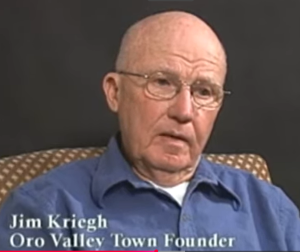
Jim Kriegh: A True Oro Valley Legend

Jim Kriegh was a true Oro Valley legend (1928 – 2007)

A man whose vision, curiosity, and leadership helped shape the community we know today. As a co-founder and former President of the Oro Valley Historical Society, Jim played a vital role in preserving and promoting our town’s heritage.

Marjorie Kriegh, along with her children Kevin and Kathy, strongly supported Jim’s vision for incorporation. While working for an attorney, she confirmed it was indeed possible. Marjorie then began saving newspaper articles throughout the process, ultimately filling three large scrapbooks. She later became the Town Historian and continued documenting the journey to successful incorporation.

Jim was also instrumental in the Town of Oro Valley’s acquisition of Steam Pump Ranch, ensuring that this historic site would be protected and shared with future generations.

Henry G. Zipf and Jim Kriegh at the Society's first fund raising event held at White Stallion Ranch

Henry “Hank” G. Zipf and Jim Kriegh at the Society’s first fund raising event held at White Stallion Ranch

Read more about how the Oro Valley Historical Society:  Who we are, a description of the Pusch House Museum, and how the dream to preserve Oro Valley history began with three people, Jim KrieghDick Eggerding, and Pat Spoerl.


Jim’s other contributions:

The Sheraton Resort / El Conquistador Tucson, A Hilton Resort

Opened in 1982 as Tucson’s first major resort, the Sheraton Resort—now El Conquistador Tucson, A Hilton Resort—sits along Oracle Road at the base of the Santa Catalina Mountains.

Fast-tracked through Oro Valley’s early permitting process, the project was overseen by Jim Kriegh, whose engineering expertise ensured its successful completion. The resort quickly became a vital source of tax revenue for the newly incorporated town, helping fund essential services and facilities.

In 2003, Hilton Hotels acquired the property. The 1980s marked a period of rapid growth for Oro Valley, including the 1986–87 annexation of more than 8,600 acres—over 7,000 of which became Rancho Vistoso.

ORO Valley dedicates a park to Mr. Kriegh
Close up of the heart in the mural at James D. Kriegh Park. Photo taken October 2025.

Mural at James D. Kriegh Park.

Mural at James D. Kriegh Park. Photo taken October 2025

Jim’s Advice to YOU: Dream it, then do it!

Dedicated on April 18, 2001—Oro Valley’s birthday—James D. Kriegh Park honors our town founder.  A nature lover, Jim often walked the park’s trails with his dog and was deeply moved by the recognition. The park is located at 23 W. Calle Concordia, near his former home.

Memorial Rock at James D. Kriegh Park. Photo taken October 2025.

Memorial Rock at James D. Kriegh Park.

Memorial Rock Plaque at James D. Kriegh Park. Photo taken October 2025

Memorial Rock Plaque at James D. Kriegh Park.


Did you know?

Freedom's Steadfast Angel of Love sculpture created by Lei Hennessy-Owen

Freedom’s Steadfast Angel of Love sculpture created by Lei Hennessy-Owen

The park features a 9/11 Memorial honoring both the national tragedy and Christina-Taylor Green, a CDO softball player and victim of the 2011 Safeway shooting. Born on September 11, 2001, Christina is remembered with an angel statue overlooking the softball field, which includes an I-beam from the Twin Towers, metal from the Pentagon, and a boulder from the Pennsylvania crash site.  Explore Freedom’s Steadfast Angel of Love and other public art in Oro Valley.

Discover Oro Valley’s public art program – how it began, the people behind it, and a fun self-guided tour of five sculptures at Steam Pump Ranch and Steam Pump Village!


A life full of curiosity and Passion
Jim Kreigh Meteorite Flyer

Visit the Pusch House Museum to View Jim’s Meteorite Collection from Around the World.

A civil engineer and retired University of Arizona professor, Jim combined a deep respect for the past with an insatiable passion for discovery. That same spirit led him to an extraordinary find:

The Gold Basin Meteorite Discovery

In 1995, while metal detecting for gold, Jim Kriegh discovered one of the world’s largest meteorite fields in Gold Basin, Arizona. Analysis by the University of Arizona’s Lunar and Planetary Laboratory identified the fragments as L4–5–6 chondritic meteorites, about 4.5 billion years old.

Jim, along with John Blennert and Twink Monrad, recovered over 2,000 meteorites, believed to have fallen up to 15,000 years ago.

Announced at the 1998 Tucson Gem and Mineral Show, the discovery made Jim a local celebrity. He traded and collected meteorites from around the world, later donating part of his collection to the Oro Valley Historical Society.  Learn more on our Meteorite Page, where you’ll find interviews, videos, and details about Jim’s historic Gold Basin meteorite discovery.

Oro Valley owes much to Jim’s dedication to both science and history. His work reminds us that exploration doesn’t just happen in faraway places — sometimes, it begins in our own backyard.

OTHER RESOURCES: LOVE: Let Oro Valley Excel: James (Jim) D. Kriegh – Oro Valley Founding Father and Much More

Honoring Heritage: The Story of the Burden Basket

Two Apache Indian Baskets Display at Pusch House Museum

Apache Indian Baskets often on Display at Pusch House Museum

Pima_Papago Burden Basket Donated by Walter Pusch

Pima_Papago Burden Basket Donated by Walter Pusch

The Oro Valley Historical Society extends heartfelt thanks to Walter Pusch, great-grandson of George and Mathilda Pusch, for his generous donation of two remarkable pieces to the OVHS Collections — a Pima (Akimel O’odham) / Papago (Tohono O’odham) Burden Basket and an Apache Burden Basket.
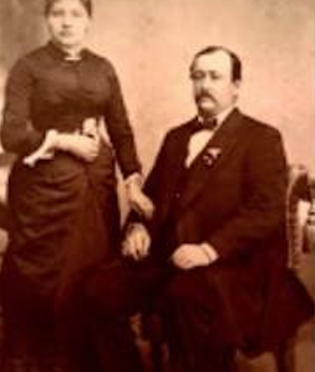
These baskets are more than beautiful examples of traditional craftsmanship — they represent the daily lives, resilience, and cultural values of the Native women who made and used them.
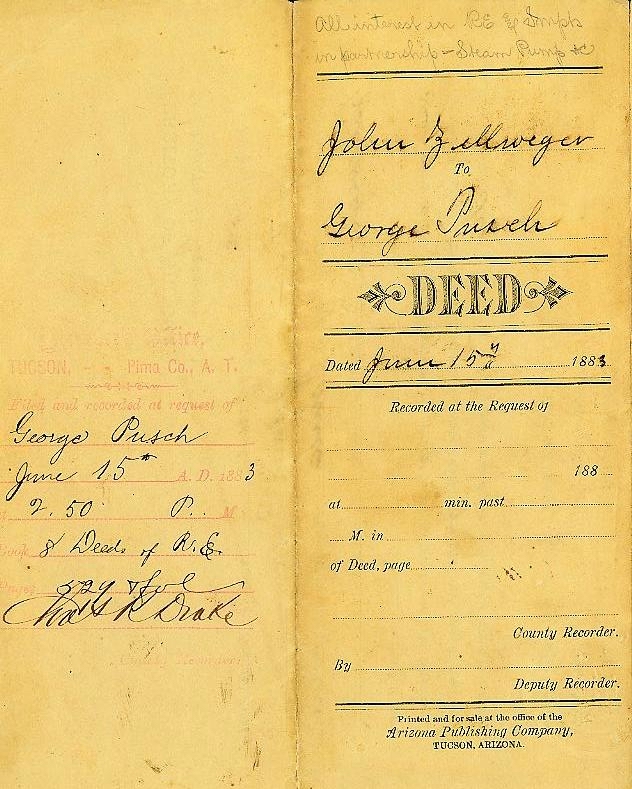


The Purpose of the Burden Basket

Burden baskets were essential tools, typically carried by Native American women to gather food, roots, and firewood. Designed to be worn on the back, the baskets left the hands free for other tasks — a testament to both practicality and ingenuity.

The Pima basket (kiaha) features a wooden frame intricately laced with woven agave fibers. The Apache basket, made from yucca, devil’s claw, and willow, displays a distinctive coiled design with patterns worked into the weave. Tassels, often crafted from animal hide, sometimes ended in bits of tin that jingled softly — believed to keep snakes away.
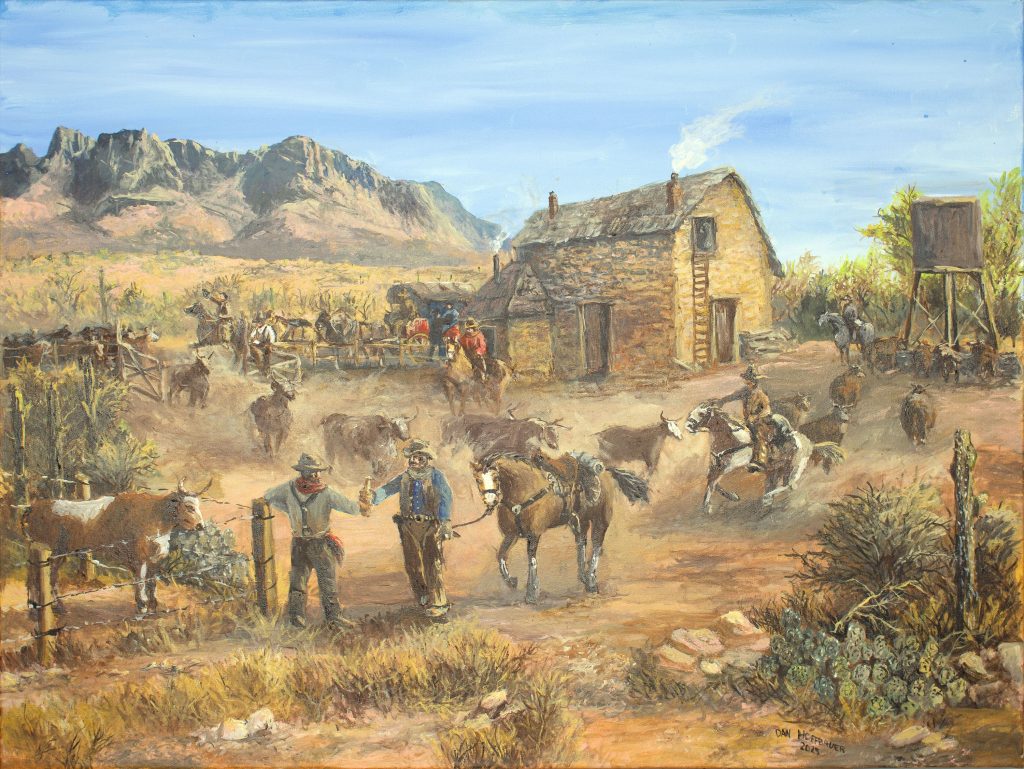
Apache Indian Baskets Display at Pusch House Museum

Apache Indian Baskets at times Displayed at Pusch House Museum

A Symbol Beyond Use

When not in use, burden baskets were hung at the entrance to the home. Visitors would symbolically “leave their burdens at the door,” placing their worries in the basket before entering. This practice reflected a deep sense of self-reliance and respect for the household’s peace and privacy.

Through these baskets, we glimpse the harmony of daily work, community, and spiritual mindfulness that defined Native life in the desert Southwest.

The Oro Valley Historical Society is proud to preserve and share these meaningful artifacts — and deeply grateful to Walter Pusch for helping us continue to tell the stories of the people who shaped our region’s history.

OTHER ARTICLES:


Colorful reproduction of the Tully and Ochoa Wagon Attack, May 1869. Apache and settlers in a battle.

Tully and Ochoa Wagon Attack, May 1869

The Apache – Apache Relationships to the Land and Lifeways of What Is Now Oro Valley, AZ., by Brittnie Smith, March 2026

Tully & Ochoa Wagon Attack – May 1869, The Day a Tucson Freight Train Fought for Survival

A Poster of Apache “Shis-Inday” Leaders / Chiefs

Local Artist Dan Hoffbauer Wins SAAG Award (& Supports OVHS, too!)

On Sunday, September 21, 2025, Dan Hoffbauer won the Award of Merit for his painting Saguaro Sunset at the Overlook Restaurant in Oro Valley.  Dan is a new member of the Southern Arizona Arts Guild and a new supporter of the Oro Valley Historical Society.  This is his first show with SAAG, and it is not the only painting that was entered into the exhibition.  His second painting shows a representation of a cattle round-up at the historic Steam Pump Ranch.

Acrylic on Canvas paining by Dan Hoffbauer depicting a lively, active day at Steam Pump Ranch in the late 1800's.

Watering the Cattle at Steam Pump Ranch by Dan Hoffbauer, 2025

For every print of Watering the Cattle – Steam Pump Ranch @1880 sold, artist Dan donates 25% to OVHS!
You can purchase a print in one of three ways:

SAAG has graced the walls of the Overlook Restaurant on a complimentary basis for approximately 15 years, rotations occurring twice a year.  Enjoy breakfast, lunch, or beverage at the restaurant, while appreciating the best view in Oro Valley – now both inside and out as you behold Dan’s painting, displayed in the bar area.

Learn more about Dan Hoffbauer’s artistic journey in the Pima County Public Library’s blog: Art Exhibit: Dan Hoffbauer.

SAAG Award-Winning Saguaro Sunset Painting by Dan Hoffbauer 2025 with a fiery sky and cactus

SAAG Award-Winning Saguaro Sunset by Dan Hoffbauer 2025

Spirits Stir at Steam Pump Ranch

In July 2025, the Oro Valley Historical Society opened the doors of George Pusch’s 1870s home to the Tucson Paranormal Society. For years, whispers of ghostly sightings have lingered at Steam Pump Ranch—and this night was dedicated to uncovering the truth. OVHS volunteers, Devon Sloan and Sue Chambasian, along with Leiber family members, Cheryl and Kathryn, joined the vigil, sitting in stillness as the air grew heavy, waiting for the spirits to step out from the shadows.


Article by David Swift of Tucson Paranormal Times, Fall 2025, Page 7. Searching for Hauntings at Steam Pump Ranch

Tucson Paranormal Times Fall Equinox 2025, Page 7

Read the online article in the Arizona Paranormal Times Fall Equinox 2025 by David Swift.

KGUN 9 Visits Steam Pump Ranch to Celebrate 20 Years of OVHS!

Jim Williams, Author of Oro Valley, The First Fifty Years and Recipient of the 2025 Award of Excellence from the American Association of State and Local History.

Jim Williams, Author of Oro Valley, The First Fifty Years and 2025 winner of a national award from the American Association of State and Local History.

🎉 A big thank you to Kenny Darr of KGUN 9 News for highlighting the Oro Valley Historical Society, Steam Pump Ranch, and the Pusch House Museum.

Here is a transcript of that video:

For the past 20 years, the Oro Valley Historical Society has worked to preserve buildings like this one, so stories of the past live on for generations to come.

The society first formed in 2005 thanks to a small group of residents who wanted to save historic landmarks from development. Volunteers have helped restore buildings and curate exhibits to share Oro Valley’s history.

“Even though this society historic as this whole property, the fact that we’re 20 years old speaks to the fact that people do care about what came before us. The people that lived on this property, worked on this property, and the stories behind them.”

As part of the 20th anniversary, the society is back in full swing, with a new season of exhibits. Free guided tours are available every Saturday morning, and self-guided tours can be done anytime during the week.

“It’s very satisfying to give back something the community. This is really an essential part of Oro Valley. This is our history. You know, you get a good feeling when you do volunteer work, and there’s a bit of a payback there that you get that makes you feel good.”

The next round of exhibits kicks of this month, right here at Steam Pump Ranch.

As OVHS marks 20 years of preserving and sharing Oro Valley’s history, we’re excited to bring you a season filled with:

        • Engaging exhibits

        • Guided nature walks on Saturdays

        • Special guest speakers at the OV Public Library with a variety of topics like meteorites, history of Empire Ranch, Hohokam craft traditions, Earl Linwood Francis story, how to care for Iris and other bulbs, Biosphere 2 and more!

        • A self-guided art sculpture tour

        • New interpretive signs at Steam Pump Ranch

        • Our newsletter has a brand-new look! Fresh, modern, and designed to keep you connected with OVHS.  Sign up for our newsletter.

        • Our recently launched modern website (thanks to Red Coyote Services!)

        • Donation drives in support of other local non-profit organizations

📲 Stay connected! Follow us on Instagram and YouTube, and visit our Calendar of Events for dates/times of our special activities and to join in the celebration!

There are so many ways to support OVHS!
  • Get Involved in keeping Oro Valley history alive!
  • Visit us on Saturdays and purchase award winning Oro Valley, The First Fifty Years, authored by local resident and ardent OVHS supporter, Jim Williams.